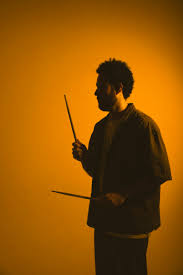
Havana During Jazz Plaza
Havana has been living through unstable days — politically, energetically, emotionally. Blackouts, uncertainty, that low hum that never quite switches off. And yet, in the middle of it all, jazz arrived like a flood. Cuban jazz and international jazz spilled across the island and took over the nights.
From Santiago de Cuba to Santa Clara and Holguín — but especially here in Havana, where I live — stages and night venues filled with improvisation, rhythm and risk. Jazz and alternative music claimed their space without asking permission.

For readers of El Grito and lovers of Cuban music, the International Jazz Plaza Festival needs little introduction. It is the largest music event in the country, held every year since 1980. A meeting point for legends of the genre and young musicians just beginning to test their wings. A festival that doesn’t just celebrate jazz — it renews it.
Staying true to El Grito’s mission of focusing on what is new, alive and happening right now in the Cuban music scene — and driven by my own curiosity to experience this great jazz ritual from the inside — I moved between concerts, camera in hand, absorbing sounds, faces and moments. Two nights, in particular, stayed with me.
The first was on Wednesday, January 28, in the concert hall of the National Museum of Fine Arts. It was raining that night, and in the air you could already feel the chill of the coming days. I walked my usual route from home to the museum — just a few blocks, nothing heroic — but full of anticipation. Good music has the power to warm you even before it begins.
By 7 p.m. there was already a small queue. Inside, the audience surprised me: many foreigners, clearly drawn to Havana by the magnetism of the festival. Every seat was taken. People were sitting in the aisles. Finding a place to stand — and to film — became an improvisation exercise in itself.
The lights went down. My heart began to race.
The concert began.
Under the title Epicentro, the show was led by Ruly Herrera & Real Project, joined by pianist Ángel Toirac, trombonist Diansy López — now beginning his solo path under the artistic name El Negro Toca Trombón — and percussionists Yaroldy Abreu and Kevin Dedeu.
What unfolded was not just a concert, but a map: improvisation drawn in real time, lines of energy crossing and colliding. Traditional Cuban rhythms — conga, danzón, rumba — opened pathways toward experimental territory. Contemporary Cuban jazz: alive, restless, refusing to sit still.
The second night came on Saturday, January 31, at 11:30 p.m., in Nave 4 at the Fábrica de Arte Cubano. This time I wasn’t alone — a friend joined me. We arrived early, ordered drinks and wandered through the space. In other rooms music was already playing, all of them packed — mostly with young people dancing with the urgency of those who know nothing is guaranteed.
At exactly 11:30, the Spanish group Compota de Mañana took the stage, later joined by Telmary Díaz. The first thing that struck me was visual: their clothes. Different styles, elegant, but united by one colour — pink. Under the stage lights they looked like a vast field of pink gladioli.
Then came the sound.
Avant-garde, yet deeply Cuban. Big salsa orchestra energy. The timba clave snapping through every bar. Curious, I asked a photographer beside me what genre they were playing.
“Alternatimba,” he told me.
A style the band itself created in 2018.
Led by vocalist Erik Castillo.
There was no time for more questions. The crowd erupted. Telmary Díaz had just stepped on stage — a legend, one of the first women in Cuban rap, and an artist we at El Grito had the privilege of covering months ago. Together, Telmary and Compota de Mañana performed Miedo. The emotion in the room is impossible to describe.
The band made the audience sing, dance and sweat as if they were a Cuban salsa group born and raised on the island. Watching these foreign musicians give everything, moving with the music, dancing salsa without distance or irony, helped me finally understand the essence of Jazz Plaza.
It doesn’t matter where you come from.
It doesn’t matter where you are.
It doesn’t matter how difficult things may be.
Music is universal.
The concert ended more than an hour later. Exhausted but happy, my friend and I took a taxi home. Back in my room, wide awake, I sat down immediately to write this — for you, friends of El Grito — with the hope that next year you too can experience this great celebration of jazz in Cuba.
Until Jazz Plaza 2027.
With love and rhythm,
Kamila del Grito
Kamila del Grito

 El Grito