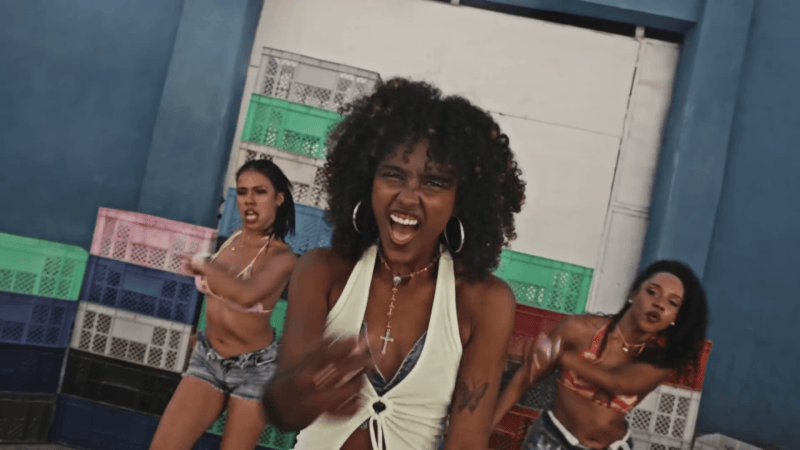
Cannela: Reparto en sus propios términos

Era sábado en la noche el termómetro marca treinta y seis grados, el aire se sentía pegajoso. Las altas temperaturas ya delataban la entrada del verano en esta isla caribeña donde el sudor provocado por la buena música entra a formar parte de nuestra idiosincrasia. Me encontraba sentada en la terraza del recién inaugurado bar Bongo Loco, una casa antigua y con arquitectura colonial de ventanales gigantes y terraza amplia como muchas de las que abundan en La Habana, pero esta promete ser el nuevo refugio para esos artistas jóvenes cubanos que buscan un sitio donde expresar su arte, como es el caso de mi entrevistada en esta ocasión, a la que estaba esperando.

Había llegado un par de horas antes de que empezara el concierto. El generador del bar se apagó tres veces, fui testigo de cómo cada vez que las luces se iban, los músicos encendían sus teléfonos y seguían tocando el ensayo. Situación habitual, diría cualquier cubano: la incertidumbre de los apagones interminables ya es parte del paisaje sonoro y de la cotidianidad de nuestro diario.

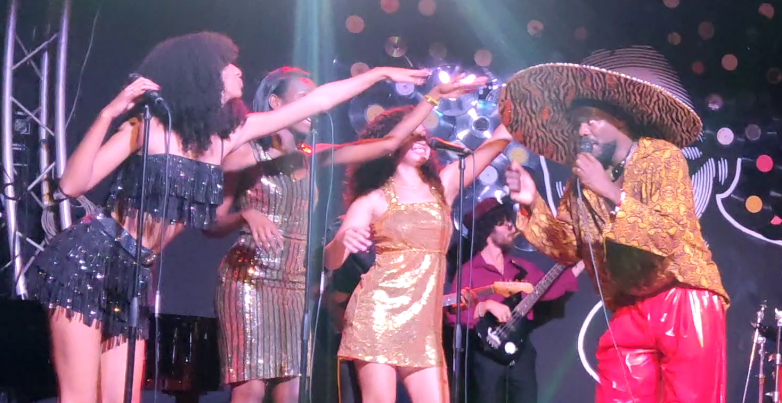
Mi entrevistada entró por la puerta del local y me vio entre la gente. Cannela —con tan solo 19 años, el pelo afro como el mío— se ha abierto paso a la fuerza en la escena musical cubana con canciones como La Noche, Cadenas y Ángeles. A veces, su voz es tan suave como un atardecer habanero; otras, se transforma en un gruñido que anuncia su llegada como el comienzo de la temporada de huracanes. Una joven que se abre camino con seguridad en la escena del reparto, dominada por los hombres. . Dirías que hacen falta cojones, pero ella demuestra que no.

Mientras me siento con Cannela, la veo ser saludada una y otra vez por músicos, amigos y seguidores. El ambiente es informal, pero extraordinario, como una fiesta en casa donde uno de los amigos acaba de convertirse en una estrella. Todos en aquel lugar tienen alguna relación con Cannela y parecen quedar magnetizados mientras ella acapara la atención. Supongo que es algo universal, pero en Cuba especialmente, la paradoja entre la glamurosa personalidad pública de un artista emergente y su vida real resulta impactante. Y, como era de esperar, eso termina siendo el corazón de esta historia.

Un bautizo musical, el recurso del alter ego como forma de resistencia o simplemente, el nacimiento de la diva:

A la medida que intercambiaba las primeras palabras de contacto, la primera pregunta se iba haciendo más clara en mi cabeza, la curiosidad sobre aquel nombre tan inusual y tan cubano era imperiosa. ¿Acaso era un personaje? ¿Un estado de ánimo? ¿Una invención? así que sin ningún tapujo le formulé mi primera pregunta.

Dudé que sus padres la hubieran llamado Cannela. No conocemos a las personas Benito Martínez, José Manuel Carbajal Zaldívar o Stefani Germanotta como conocemos a las personalidades Bad Bunny, El Taiger y Lady Gaga.

¿Cómo conseguiste tu nombre, Cannela?

Me dijo que su verdadero nombre es Alejandra, pero que el nombre Cannela llegó a su vida como una broma que se quedó cuando, a los dieciséis años, decidió llevar su pelo afro natural y sus amigos más cercanos empezaron a llamarla Canela, haciendo referencia a la canción infantil cubana Estela es un granito de canela. Ya había empezado a subir sus primeros covers a una cuenta de Instagram con su nombre real y, un día, como una broma, cambió el nombre a Cannela sin imaginar que aquella broma pudiera llegar tan lejos.

Como Cannela, yo también estoy construyendo un disfraz: un personaje de periodista Gonzo, intentando establecer un estilo guiado por los sentimientos y el mito en lugar de la insípida letanía de datos que recibimos aquí: asistió a tal conservatorio, ganó tal premio. Me acordé de Gabo Cárdenas y de cómo creó y luego habitó esa personalidad más grande que la vida al frente de Vita Kará. Ver a Cannela, ver a Gabo, verme a mí misma convirtiéndome en Kamila del Grito y hacer de un personaje poderoso un aliado, una gueparda callejera vestida de cuero amarillo, se siente como un cortafuegos frente a una vida de gastar 8 dólares de un salario de 15 en aceite de cocina, o de cruzar la ciudad simplemente porque en casa de mi madre funciona la ducha.

Deseosa de saber más sobre la desconocida Alejandra sentada a mi lado, le pregunté:

¿Cuánto de Alejandra tiene Cannela y cuánto es un personaje necesario para sobrevivir, triunfar y ser deseada en la Cuba actual? ¿Cannela nació para expresarte o nació para ser observada?

«Un poco de las dos, mientras Alejandra es callada, tranquila bastante despistada, Cannela por otro lado es más activa, baila canta hace show, habla mucho, esa es la diferencia», me confiesa Cannela con el rostro reflexivo mientras se acomoda sus rizos afro de un lado hacia el otro, «aunque últimamente como que tiendo a fusionarme porque últimamente ando tan metida en el mundo de la música, que en la mayoría de las veces las personas con las que me relaciono me conocen ya por Cannela, y muchas veces sin estar a un concierto o sin estar grabando, ya actuó de manera más libre, más fresco, con más confianza, hablo más me desarrollo mejor.»

¿Cómo crees que será dentro de 10 años cuando hayas interpretado tanto el papel de Canella que se convierta en parte de ti?

«Creo que sería una híbrida…», dice entre risas, «cosa que he estado experimentando ya en dos o tres ocasiones.»

Para Alejandra, tener el personaje de Cannela ha sido una gran ventaja. Siente que es la justificación perfecta para ser quien ella quiera, con aciertos y contradicciones. Alejandra y Cannela, dos mujeres habitando el mismo cuerpo, dos artistas que no luchan por sobresalir una por encima de la otra, sino que se complementan.

Del hobby a los grandes escenarios

En Cuba, “tomárselo en serio” a menudo significa renunciar a todo lo demás. ¿Qué significó eso para ti, Cannela? —le pregunté—. ¿Y cuándo diste ese salto?

 Cannela siempre soñó con “ser cantante” y, a lo largo de su juventud, esa obsesión se convirtió en algo más que un hobby. Pero cuando le ofrecieron una plaza para estudiar Medicina tuvo que tomar una decisión.

«A decir verdad, siempre será mi sueño frustrado porque también me encanta todo lo que tiene que ver con la anatomía», me dijo como si fuera palabras dedicadas a un añorado amante. Pero en Cuba estudiar Medicina significaba renunciar por completo a la música, una idea que no le gustaba, por lo que declara:

«Mi propia madre me dijo: “Si quieres, espera un año y escoge una carrera que te exija menos, o estudia Medicina”. Yo decidí esperar».

Fue a partir de ese momento decisivo de su vida cuando empezó a desarrollar este personaje de Cannela a través de sus canciones. Su voz se vuelve más firme mientras me dice:

«Traté de buscar productores, de informarme, sobre todo, de ir aprendiendo. Todavía lo sigo haciendo. Ha sido un proceso poco a poco»

¿El glamour cubano, un estilo de vida, una pose, añoranza de un pasado lejano o una forma de resistencia ante la realidad cotidiana?

En las décadas de 1940 y 1950, el Paseo del Prado era una pasarela urbana espléndida y exótica, como la esencia misma de la mujer cubana. Leyendas como Celia Cruz y Rosita Fornés marcaban tendencia, y el estilo cubano resonaba hasta Londres y París. La Cuba de 2026 es brutalmente diferente. Vestirse se ha convertido en poco más que una necesidad básica. Quería saber qué significaba para Cannela haber creado una personalidad pública que desafiaba las normas.

Sus videos proyectan seguridad, glamour y control, pero dejan entrever la realidad cotidiana de Cuba. ¿Cómo conviven esas dos versiones de su vida sin que una termine contradiciendo a la otra?, le pregunté.

Cannela se declara una cubana como cualquier otra, consciente de que vive en dos mundos muy distintos.

«Cuando estoy en el estudio o en el escenario, desconecto. Trato de dejar fuera toda mi cotidianidad como cubana.»

Me cuenta que, a veces, ha sido impactante pasar de un bar lujoso donde, supuestamente, no ocurre nada y todo está bien, a llegar a su casa, donde la falta de electricidad complica y endurece su vida cotidiana.

Mirándolo desde Cuba hacia Inglaterra, el glamour me parece real: los artistas tienen asesores de imagen, estilos de vida lujosos y una estructura dentro de la industria que sostiene el mito. En esta isla, para Cannela y quienes son como ella, cuyos ensayos y conciertos son interrumpidos o cancelados con demasiada frecuencia, encontrar transporte para mover los instrumentos de su banda es una misión imposible. Ver a una muchacha de solo diecinueve años me hace preguntarme cuánto esfuerzo invisible hay detrás de esa imagen perfecta. «¿Crees que el glamour es una forma de rebeldía en Cuba?», le pregunté. «Porque muchas veces parecer una artista requiere más imaginación que dinero.»

«Totalmente. Casi por obligación hay que recurrir a la imaginación, tanto para vestir con glamour como para ser original.»

El barrio como escuela

Cannela vive en Reparto Martí, un barrio popular de La Habana. «Antes vivía en un lugar tranquilo», me cuenta, pero mudarse allí cambió la manera en que entiende la música que hoy interpreta.

«Estar en un barrio donde se escucha mucho reparto me ayuda a entender por qué las letras son como son, su sabor, su ritmo. Sobre todo, ese ritmo que te hace moverte, que te hace bailar.»

No está hablando simplemente de escuchar un género musical. Está hablando de vivir dentro de él, de entenderlo desde las calles donde nació y donde sigue siendo la banda sonora de la vida cotidiana.

«Y eso es lo que me interesa, adaptarlo al tipo de música que hago.»

No quiere copiar el reparto. Quiere absorber aquello que hace que funcione.

Su ambición, me explica, es convertirse en una artista versátil.

«Tratando de hacer un reparto que sea menos vulgar, un reparto que te haga bailar, que no solo te deje un poco atontado, sino que te haga moverte a otro nivel. Un repertorio que te pueda hacer bailar mucho, pero que también te haga escuchar la letra o sentarte a interpretar lo que está diciendo la canción.» Explica que por «menos vulgar», Cannela se refiere a las letras, no al ritmo. Para ella, el reparto no necesita letras obscenas para hacer que la gente se mueva; limpiar las letras es una decisión artística, no un intento de hacer que la música sea más aceptable para un público internacional.

Escuchándola, comprendí que Cannela no rechaza el reparto ni pretende convertirlo en otra cosa. Quiere conservar su energía, su ritmo y su capacidad para hacer que la gente se mueva, pero también quiere invitarla a escuchar con atención lo que las canciones realmente están diciendo.

¿Cómo definirías el reparto?

«El reparto es una música que surge de vivir la adversidad. Es una manera alegre de vivir, y eso es lo que siempre ha distinguido al cubano.»

La misoginia del reparto

El reparto nació en los barrios más marginales de La Habana alrededor de 2007. Como su nombre sugiere, sus canciones eran un grito musical surgido de aquella dura marginalidad urbana. Las letras hablaban de sexo, drogas y los códigos de la calle. Hoy se ha extendido hasta convertirse, sin duda, en el sonido que la mayoría de los cubanos prefiere. Es un género musical que, por lo general, ha sido un ecosistema casi completamente masculino. De las mujeres, al igual que en el reguetón, muchas veces solo se esperaba que aportaran la imagen.

Entonces llegó Cannela, construyendo una carrera en este género con una voz que parece decir: «Yo también puedo hacer esto, y mejor.»

Así que le pregunté: «Creo que es justo decir que proyectas una imagen muy moderna de la feminidad cubana. En tus videos hay una sexualidad segura de sí misma y una afirmación de tu derecho a formar parte de la cultura del reparto, que en ocasiones ha sido extremadamente misógina. ¿Ha sido fácil? ¿Y crees que ahora es más fácil de lo que habría sido para alguien en tu posición hace veinte años?»

«Realmente no es del todo fácil. Porque las mujeres casi siempre son objetos decorativos, tanto en el reguetón como en el reparto. Muchas veces el público presta más atención a la imagen bonita que a la música en sí… aunque con el paso del tiempo las mujeres han ido asumiendo un papel cada vez más firme dentro de la industria.»

Su respuesta me hizo preguntarme si Cannela está intentando hacer algo más que simplemente triunfar como mujer dentro del reparto. ¿Está también intentando cambiar lo que el propio reparto puede llegar a ser?

Le pregunté: «Al escuchar tus canciones, parece que se mueven del bolero al reparto, del pop al afrobeat. ¿Es más importante para ti hacer evolucionar el reparto que simplemente encajar dentro de él?»

«Ante todo, mi objetivo es demostrar la unión entre los clásicos de la música tradicional cubana e internacional con los nuevos sonidos de mi país, conocidos como reparto. Después, demostrar mi versatilidad. Me encanta la diversidad cultural y de géneros: reguetón, afrobeat, rap, hip hop, jazz y R&B.»

Y ahí estaba la clave, Cannela no está haciendo reparto que todo esperan, no está siguiendo el esquema de canciones y otro artista que siguieron la formula un triunfaron. Cannela está redefiniendo el reparto, está tomando la música tradicional cubana con géneros como el bolero, el merengue y mezclándola con el afro beat, el pop, el jazz. Está construyendo puentes donde antes solo había muros.

Una canción o una confesión disfrazada

La noche anterior a la entrevista, me senté en mi apartamento alquilado en Centro Habana con un cigarrillo mentolado en la boca y disfrutando de las canciones de Cannela al tiempo que escudriñaba en mis pensamientos hasta la última letra. “A veces sola, me siento y bebo / A veces fumo para borrar recuerdos”, canta en ‘Cadenas’. Me preguntaba si eso era autobiografía o performance y es que la línea entre ambas en el arte es tan fina que a veces desaparece.

¿Ha habido alguna canción en la que aparezca más Alejandra que Cannela?

«En todas mis canciones siempre soy mucho más Cannela que Alejandra», me confesó, «sin embargo, hay una que me toca mucho y es “Ángeles”. Le escribí desde el dolor y la tristeza de la pérdida de un ser querido. Fue la primera canción que lancé, en homenaje a una de las personas que más quise cuando estuvo en vida. Por eso escribí una historia decisiva y más creativa, que surgió más de la mente de Alejandra que de la de Cannela.»

 “Ángeles” no es una canción de reparto, es un bolero una confesión, una despedida. Y es la prueba de que Cannela puede navegar entre géneros como quien navega entre identidades.

La motomami cubana

Motomami —el concepto de Rosalía que mezcla fuerza y vulnerabilidad, tradición y modernidad—.

Cuando vi el video de “Enamorate”, no pude evitar pensar en el video de “Berghain” de Rosalía sin duda uno de los éxitos más recientes de la española. La misma apuesta visual, la misma mezcla de lo antiguo y lo nuevo, la misma declaración de que el arte no tiene fronteras.

«Me inspira Rosalía», admite Cannela. «El hecho de seguir a pesar de todo, cómo ha reinventado lo que ya estaba hecho, sin miedo a ser juzgada. Cómo es muy dueña de lo que hace.»

Pero hay algo más profundo Cannela se identifica con el debate que Rosalía ha generado: reinventar una tradición sin perder las raíces.

«Rosalía ha recibido críticas por reinventar una tradición. Yo hablo de modernizar la música cubana sin perder mis raíces. Me siento identificada con ese debate.»

Y cuando le pregunto qué considera revolucionario de Rosalía, su respuesta es simple pero contundente:

«Su interés por fallar y aprender, es increíble.»

Cannela también me narra cómo creció escuchando música tradicional y contemporánea como los Orishas, en los que también ha buscado inspiración debido a su mezcla de elementos como son hip hop y rap con la música cubana, elementos claros de su propia música. Cannela se declara un alma en constante evolución, siempre estudiando y creando algo nuevo al igual que Rosalía.

Pero su mayor amor es Nathy Peluso. «Me identifico con Nati Peluso y con su personaje por muchas razones. Primero, como mujeres, a través de las letras de sus canciones; y también, en general, por su increíble versatilidad, que aspiro a alcanzar en mi propia música.»

Es fácil entender por qué. Peluso, nacida en Argentina y criada en España, ha convertido casi en un principio el rechazo a las fronteras musicales: su álbum debut, Calambre, se movía entre la salsa, el R&B, el hip-hop y el pop argentino clásico, mientras que GRASA combinó posteriormente rap, salsa, baladas y sonidos tropicales. También estudió teatro físico antes de consolidarse como música, lo que ayuda a explicar la presencia escénica intensamente física y teatral por la que se ha hecho conocida.

Cannela destaca Remedio, de GRASA, como la canción en la que esa identificación se vuelve más personal: «Personalmente, Remedio significa mucho para mí, ya que es una canción sobre superar la adversidad y enfatiza la importancia de caerse y volver a levantarse. En última instancia, la propia personalidad de Nati Peluso se refleja en la canción, en mi carrera y también en mi música, porque insiste en que eres invencible, que siempre ha sido así y que rendirse no es una opción. Es un tema de superación de la adversidad que se repite una y otra vez, simplemente con el mensaje de seguir siempre adelante, independientemente del momento, las circunstancias, las personas, etc.»

Remedio fue lanzada en GRASA en 2024, y la propia Peluso la coescribió y produjo; su estribillo se centra precisamente en negarse a rendirse.

Una canción viral y la internacionalización del reparto

La Noche me anda buscando” Cantas en “La Noche“, que se hizo viral. ¿Fue ese el momento en que te diste cuenta de que tu música podía conectar con un público internacional?

«Creo que sí y eso me tiene muy orgullosa la verdad», respondió con una sonrisa que iluminó la terraza. «Conectar con personas me hace muy feliz. Ya había otros temas que habían llegado, pero no a esta magnitud. Sobre todo, en España y entre los cubanos residentes en Estados Unidos.»

¿Entonces cuándo escribes tus canciones, te diriges solo a la audiencia cubana o buscas una audiencia internacional?

«Sí tengo como meta llegar a un público más internacional —dijo— Sin embargo, creo que haga el género que haga, siempre va a haber un poco de Cuba en todo y sobre todo de manera tradicionalmente hablando, siempre defendiendo mis raíces.»

El reparto cubano, ese género que muchos descartan como “música de barrio”, está conquistando el mundo, pero puede llegar a ser un género verdaderamente internacional, esa es la gran pregunta que los conocedores del género se hacen.  Cannela es parte de esa vanguardia, que está llevando el sonido de reparto cubano a territorios que antes parecían inaccesibles, para ella solo es cuestión de tiempo que el reparto llegue más allá parafraseando sus palabras.

La última pregunta: ¿cómo quiere ser recordada?

Llegaba el final de la entrevista, la pregunta final me salió casi igual de espontánea que la primera.

Si dentro de diez años la gente habla del “sonido Cannela”, ¿cómo te gustaría que te recordasen?

Se quedó pensando por un instante el ruido del bar pareció disminuir el silencio entre ambas.

«Por una música que llega y va más allá de géneros musicales y partituras», dijo. «Algo auténtico, algo que vive reinventándose.»

Cannela se despidió como si ya fuéramos amigas íntimas. Media hora después, el bar a oscuras por otro corte energético inesperado y cien puntos de luz provenientes de los teléfonos del público que había venido a ver a Cannela iluminaban el escenario, Cannela entró. Rizos sueltos, pies descalzos, seguridad escénica que te dejaba sin aliento. Por un momento me pareció estar en algún club de Londres. Pero no, estamos en La Habana, donde una voz como la de Cannela ilumina una ciudad en penumbras.

Y mientras mis ojos se deleitaban con su talento, entendí lo más importante de la noche: no importa si Cannela es “real” o un personaje, no importa si sus letras son autobiográficas o invenciones. Lo que importa es que ella existe, que su música suena, que su imagen nos desafía a todos a ser más, a soñar más. Ese, queridos lectores del Grito, es el verdadero glamour cubano.
Cannela: Reparto on Her Own Terms

It was Saturday night. The thermometer read thirty-six degrees, and the air felt sticky. The high temperatures already betrayed the arrival of summer on this Caribbean island, where the sweat brought on by good music is part of our idiosyncrasy. I was sitting on the terrace of the newly opened Bongo Loco bar, an old house with colonial architecture, huge windows and a broad terrace like many of those found across Havana, but this one promises to be a new refuge for young Cuban artists looking for a place to express their art, as is the case with my interviewee on this occasion, whom I was waiting for.

I had arrived a couple of hours before the concert began. The bar’s generator cut out three times. Each time the lights went off, I watched the musicians turn on their phones and carry on rehearsing. An ordinary situation, any Cuban would say: the uncertainty of endless blackouts is already part of the soundscape and the routine of our daily lives.

My interviewee came through the door and spotted me among the crowd. Cannela — only 19 years old, with afro hair like mine — has forced her way into the Cuban music scene with songs such as La Noche, Cadenas and Ángeles. Sometimes her voice is as soft as a Havana sunset; at others, it turns into a growl announcing her arrival like the beginning of hurricane season. A young woman confidently making her way into the male-dominated reparto scene. You might say it takes cojones, but she proves it doesn’t.

As I sit down with Cannela, I watch her being greeted again and again by musicians, friends and followers. The atmosphere is informal but extraordinary, like a house party where one of your friends has just become a star. Everyone there has some connection with Cannela and seems magnetised as she commands the attention. I suppose it is universal, but especially in Cuba, the paradox between the glamorous public personality of an emerging artist and her real life is striking. And, as it turns out, that becomes the heart of this story.

A Musical Baptism, the Alter Ego as a Form of Resistance, or Simply the Birth of a Diva

As we exchanged our first words, the first question became clearer in my head. My curiosity about that unusual and very Cuban name was overwhelming. Was it a character? A state of mind? An invention? So, without any hesitation, I asked my first question.

I doubted her parents had called her Cannela. We don’t know the people Benito Martínez, José Manuel Carbajal Zaldívar or Stefani Germanotta in the way we know the personalities Bad Bunny, El Taiger and Lady Gaga.

How did you get your name, Cannela?

She told me that her real name is Alejandra, but that the name Cannela came into her life as a joke that stuck when, at sixteen, she decided to wear her afro hair natural and her closest friends began calling her Canela, referring to the Cuban children’s song Estela es un granito de canela [Estela is a little grain of cinnamon]. She had already started uploading her first covers to an Instagram account under her real name and, one day, as a joke, changed the name to Cannela without imagining that the joke could go so far.

Like Cannela, I too am constructing a disguise: a Gonzo journalist persona, trying to establish a style driven by feelings and myth rather than the bland litany of facts we get here: attended this conservatory, won this prize. I remembered Gabo Cárdenas and how he created and then inhabited that larger-than-life personality at the front of Vita Kará. Watching Cannela, watching Gabo, watching myself become Kamila del Grito and make a powerful character an ally, a street cheetah dressed in yellow leather, feels like a firewall against a life of spending $8 of a $15 salary on cooking oil, or crossing the city simply because the shower works at my mother’s house.

Eager to know more about the unknown Alejandra sitting beside me, I asked her:

How much of Alejandra is there in Cannela, and how much is a character necessary to survive, succeed and be desired in Cuba today? Was Cannela born so that you could express yourself, or was she born to be observed?

A little of both. While Alejandra is quiet, calm and quite absent-minded, Cannela, on the other hand, is more active: she dances, sings, puts on a show, talks a lot. That’s the difference — Cannela confesses to me with a thoughtful expression as she moves her afro curls from one side to the other. Although lately I feel as though I tend to merge, because I’ve been so immersed in the world of music that most of the people I associate with already know me as Cannela, and many times, even when I’m not at a concert or recording, I act more freely, more naturally, with more confidence. I talk more; I express myself better.

How do you think it will be in 10 years, when you’ve played the role of Cannela so much that she becomes part of you?

“I think I’d be a hybrid…,” she says, laughing, “something I’ve already been experiencing on two or three occasions.”

For Alejandra, having the character of Cannela has been a great advantage. She feels it is the perfect justification to be whoever she wants, with successes and contradictions. Alejandra and Cannela, two women inhabiting the same body, two artists who do not fight for one to stand out above the other, but complement each other.

From Hobby to the Big Stages

In Cuba, “taking it seriously” often means giving up everything else. What did that mean for you, Cannela?, I asked her, and when did you make that leap?

Cannela always dreamed of “being a singer” and, throughout her youth, that obsession became something more than a hobby. But when she was offered a place to study Medicine, she had to make a decision.

“To tell the truth, it will always be my frustrated dream because I also love everything to do with anatomy,” she told me as though they were words dedicated to a longed-for lover. But in Cuba, studying Medicine meant giving up music completely, an idea she did not like, so she explains:

“My own mother told me: ‘If you want, wait a year and choose a course that demands less of you, or study Medicine.’ I decided to wait.

It was from that decisive moment in her life that she began to develop the character of Cannela through her songs. Her voice becomes firmer as she tells me:

“I tried to find producers, to inform myself, above all to keep learning. I’m still doing it. It has been a gradual process.”

Cuban Glamour: a Lifestyle, a Pose, Longing for a Distant Past, or a Form of Resistance to Everyday Reality?

In the 40s and 50s Paseo del Prado was a splendid and exotic urban catwalk, like the very essence of Cuban women. Legends such as Celia Cruz and Rosita Fornés set trends and the Cuban look reverberated through London and Paris. The Cuba of 2026 is brutally different. Dressing has become little more than a basic necessity. I wanted to know what it meant for Cannela to have created a public personality that challenged the rules.

Her videos project confidence, glamour and control but hint at Cuba’s everyday reality. How, I ask her, do those two versions of her life live together without one ending up contradicting the other?

Cannela declares herself to be an ordinary Cuban woman, aware that she lives in two very different worlds.

“When I’m in the studio or on stage, I disconnect. I try to leave all my everyday life as a Cuban outside.”

She tells me how, at times, it has been shocking to go to a luxurious bar where supposedly nothing is happening, where supposedly everything is fine, and then arrive home where the lack of electricity complicates and hardens her daily life.

Looking from Cuba to England, the glamour looks real to me – artists have image consultants, luxury lifestyles and an industry structure that sustains the myth. On this island, for Cannela and her like, whose rehearsals and concerts are interrupted or cancelled by as often as not, finding transport to move her band’s instruments is an impossible mission. Seeing a girl of only nineteen years old makes me ask myself how much invisible effort lies behind that perfect image. “Do you think glamour is a form of rebellion in Cuba?” I ask. “Because many times looking like an artist requires more imagination than money.”

“Totally. Almost by obligation you have to resort to imagination, both to dress with glamour and to be original.”

The Barrio as a School

Cannela lives in Reparto Martí, a working-class neighbourhood in Havana. “I used to live somewhere quiet,” she tells me, but moving there changed the way she understands the music she now performs.

“Being in a neighbourhood where you hear a lot of reparto helps me understand why the lyrics are the way they are, their flavour, their rhythm. Above all, that rhythm that makes you move, that makes you dance.”

She isn’t simply talking about listening to a musical genre. She’s talking about living inside it, understanding it from the streets where it was born and where it remains the soundtrack of everyday life.

“And that’s what interests me: adapting it to the kind of music I make.”

She doesn’t want to copy reparto. She wants to absorb what makes it work.

Her ambition, she explains, is to become a versatile artist.

“Trying to make a reparto that is less vulgar, a reparto that makes you dance, that doesn’t just leave you a little dazed, but makes you move on another level. A repertoire that can make you dance a lot, but also makes you listen to the lyrics or sit down and interpret what the song is saying.” She explains that by “less vulgar”, Cannela means the lyrics, not the rhythm. For her, reparto doesn’t need obscene lyrics to make people move; cleaning up the words is an artistic choice, not an attempt to make the music more acceptable to an international audience.

Listening to her, I understood that Cannela does not reject reparto or intend to turn it into something else. She wants to preserve its energy, its rhythm and its ability to make people move, but she also wants to invite them to listen carefully to what the songs are really saying.

How would you define reparto?

“Reparto is music that comes from living through adversity. It’s a joyful way of living, and that is what has always distinguished Cubans.”

The Misogyny of Reparto

Reparto was born in Havana’s most marginal neighbourhoods around 2007. As its name suggests, its songs were a musical cry from that harsh urban marginality. The lyrics spoke of sex, drugs and the codes of the street. Today it has spread until it has undoubtedly become the sound most Cubans prefer. It is a musical genre that has generally been an almost entirely male ecosystem. Women, as in reggaetón, were often expected simply to provide the image.

Then Cannela arrived, building a career in this genre with a voice that seems to say “I can do this too—and better.”

So, I ask, “I think it’s fair to say that you project a very modern image of Cuban femininity. In your videos there is a confident sexuality and an assertion of your right to belong in reparto culture, which at times has been extremely misogynistic. Has it been easy? And do you think it’s easier now than it would have been for someone in your position twenty years ago?”

“It really isn’t completely easy. Because women are almost always decorative objects, both in reggaetón and in reparto. Many times the public pays more attention to the pretty image than to the music itself… although over time women have been taking on an increasingly firm role in the industry.”

Her answer made me wonder whether Cannela is trying to do more than simply succeed as a woman in reparto. Is she also trying to change what reparto itself can be?

I ask “Listening to your songs, they seem to move from bolero to reparto, from pop to afrobeat. Is it more important to you to evolve reparto than simply to fit inside it?”

“Above all, my aim is to demonstrate the union between the classics of traditional Cuban and international music with the new sounds of my country, known as reparto. Afterwards, to demonstrate my versatility. I love cultural and genre diversity: reggaetón, afrobeat, rap, hip hop, jazz and R&B.”

And there was the key: Cannela isn’t making the reparto everyone expects, she isn’t following the song formula and other artists who followed the formula and succeeded. Cannela is redefining reparto, taking traditional Cuban music with genres such as bolero and merengue and mixing it with afrobeat, pop and jazz. She is building bridges where before there were only walls.

A Song or a Confession in Disguise

The night before the interview, I sat in my rented apartment in Centro Habana with a menthol cigarette in my mouth, enjoying Cannela’s songs while scrutinising every last lyric in my thoughts. “Sometimes I sit alone and drink / Sometimes I smoke to erase memories,” she sings in Cadenas. I wondered whether that was autobiography or performance; the line between the two in art is so thin that sometimes it disappears.

Has there been a song in which Alejandra appears more than Cannela?

“In all my songs I’m always much more Cannela than Alejandra,” she confessed to me. “However, there is one that touches me deeply, and that’s Ángeles. I wrote it from the pain and sadness of losing a loved one. It was the first song I released, as a tribute to one of the people I loved most when they were alive. That’s why I wrote a decisive and more creative story, one that came more from Alejandra’s mind than Cannela’s.”

Ángeles isn’t a reparto song, it’s a bolero, a confession, a farewell. And it is proof that Cannela can navigate between genres as she navigates between identities.

The Cuban Motomami

Motomami – Rosalía’s concept combining strength and vulnerability, tradition and modernity.

When I watched the video for Enamorate, I couldn’t help thinking of the video for Berghain by Rosalía, undoubtedly one of the Spanish artist’s most recent successes. The same visual ambition, the same blend of the old and the new, the same declaration that art has no borders.

“Rosalía inspires me,” Cannela admits. “The fact that she keeps going despite everything, how she has reinvented what already existed, without being afraid of being judged. How she has complete ownership of what she does.”

But there is something deeper. Cannela identifies with the debate that Rosalía has generated: reinventing a tradition without losing your roots.

“Rosalía has received criticism for reinventing a tradition. I talk about modernising Cuban music without losing my roots. I identify with that debate.”

And when I ask her what she considers revolutionary about Rosalía, her answer is simple but powerful:

“Her willingness to fail and to learn. It’s incredible.”

Cannela also tells me how she grew up listening to both traditional and contemporary music, including Orishas, who have also inspired her through their fusion of hip hop and rap with Cuban music—elements that are clearly present in her own work. Cannela describes herself as a soul in constant evolution, always studying and creating something new, just like Rosalía.

But her greatest love is Nathy Peluso. “I identify with Nathy Peluso and her persona for many reasons. First, as women, through her song lyrics; and also, in general, her incredible versatility, which I aspire to achieve in my own music.”

It is easy to see why. The Argentine-born, Spain-raised Peluso has made refusing musical boundaries almost a principle: her debut album Calambre moved between salsa, R&B, hip-hop and classic Argentine pop, while GRASA later combined rap, salsa, ballads and tropical sounds. She also studied physical theatre before establishing herself as a musician, which helps explain the intensely physical, theatrical stage presence for which she has become known.

Cannela singles out Remedio, from GRASA, as the song in which that identification becomes most personal: “Personally, ‘Remedio’ means a lot to me, as it’s a song about overcoming adversity and emphasizes the importance of falling down and getting back up. Ultimately, Nati Peluso’s own personality is reflected in the song, in my career, and in my music as well, because it stresses that you’re invincible, that it’s always been that way, and that giving up isn’t an option. It’s a theme of overcoming adversity that repeats itself time and again, simply with the message of always keeping going, regardless of the moment, the circumstances, the people, etc.”

Remedio was released on GRASA in 2024, and Peluso herself co-wrote and produced it; its refrain centres precisely on refusing to give up.

A Viral Song and the Internationalisation of Reparto

“La Noche me anda buscando,” [The Night is looking for me] you sing in La Noche, which went viral. Was that the moment when you realised your music could connect with an international audience?

“I think so, and I’m honestly very proud of that,” she replied with a smile that lit up the terrace. “Connecting with people makes me very happy. Other songs had reached people before, but not on this scale. Especially in Spain and among Cubans living in the United States.”

So when you write your songs, are you writing only for a Cuban audience, or are you trying to reach an international one?

“Yes, my goal is to reach a more international audience,” she said. “However, I think that whatever genre I make, there will always be a little bit of Cuba in everything I do, especially in the traditional sense. I will always defend my roots.”

Cuban reparto, the genre that many dismiss as nothing more than “music from the neighbourhoods,” is beginning to conquer the world. But can it become a truly international genre? That is the great question people who know the genre are asking. Cannela is part of that vanguard, taking the sound of Cuban reparto into territories that once seemed inaccessible. For her, to paraphrase her own words, it is only a matter of time before reparto reaches even further.

The Final Question: How Does She Want to Be Remembered?

The interview was drawing to a close. My final question came almost as spontaneously as the first.

If, in ten years’ time, people speak about the “Cannela sound”, how would you like to be remembered?

She paused to think for a moment. The noise of the bar seemed to fade as the silence settled between us.

“For music that reaches beyond musical genres and beyond the written score,” she said. “Something authentic. Something that keeps reinventing itself.”

Cannela said goodbye as though we had already become close friends. Half an hour later, the bar plunged into darkness during yet another unexpected power cut and a hundred points of light from the phones of the audience who had come to see Cannela illuminated the stage. Cannela walked on. Loose curls. Bare feet. A stage presence that took your breath away. For a moment I felt as though I were in some club in London. But no. We were in Havana, where a voice like Cannela’s lights up a city living in the shadows.

And as my eyes delighted in her talent, I understood the most important thing about the evening. It no longer mattered whether Cannela was “real” or a character. It no longer mattered whether her lyrics were autobiographical or invented. What mattered was that she exists. That her music is heard. That her image challenges all of us to become more, to dream more. That, dear readers of El Grito, is the true glamour of Cuba.

El Limba – Pure Cuban, Pure Hip Hop

The relationship between Cuban music and American music has had its twists and turns. While rock and roll was long viewed with suspicion after the Revolution, hip-hop was different. In the 1990s, young Cubans connected strongly with the messages of politically conscious American rappers, and the movement received an unusual degree of official support. The Cuban Rap Agency was established and the Festival de Rap Cubano was launched.

When I arrived in Havana in the early 2000s, Cuban hip-hop was impossible to ignore. Documentary makers seemed to be everywhere. Back home, my main reference was a single film, Cuban Hip Hop All Stars, which opened a world of unknown superstars attacking everything from racism and poverty to family pressures and social hypocrisy. When Kamila and I launched El Grito, catching up on the state of Cuban hip-hop was high on my list, but traces of that vibrant scene in 2025 Havana were hard to find.   

So I was excited when, during the 2026 Cubadisco festival, Kamila met the rapper El Limba. He had emerged in 2004, almost exactly where my own knowledge of Cuban hip-hop ended, and had remained active ever since. As a thoughtful conscious rapper whose work ranges from social commentary to questions of identity and self-acceptance, he seemed the ideal guide to what had happened next and his own part in that story.

Becoming Limba

I started out by asking what it was like getting established in those early days. Limba’s answer begins with a reminder that the scene I remembered was already highly developed by the time I arrived. The rappers who dominated those years have become legendary within Cuban hip-hop: Los Aldeanos, Mano Armada, Explosión Suprema, Hermanos de Causa, Los Paisanos, Anónimo Consejo, Obsesión, La Alianza, Proyecto Chardo, Pabelo and Bárbaro el Urbano among others. While I was discovering them through documentaries, he was studying them in person.

“Back then I liked going to the peñas [8-Mile style open mic nights] as a spectator, and what I did was absorb everything from everyone who got up on stage to rap.”  As he pushed through, he realised these peñas were not casual affairs –  “In order to get on stage I had to prove that I knew how to rap, not just say that I was a rapper. It could take months, even years, before you were accepted into a peña, because back then you had to be good. It wasn’t like now, when anyone can make a video and upload it to social media. Back then it wasn’t like that at all.”

The turning point came after school, when listening gave way to participation. Limba began writing, improvising and recording, gradually finding collaborators who helped him establish himself. The most important were Edilberto, known as El Castigador del Tiempo, and Fran Luis, known as Franco, who produced his first official album, Pa Los Que No Me Conocen (“For Those Who Don’t Know Me”).

Recognition arrived through the Malcolm Beybe collective. “The project had a huge impact on Cuban rap because we were like the Wu-Tang Clan of Cuba, except that there were many more of us,” he recalled.

The group toured nationally and became a fixture of the rap circuit. Looking back, however, he sees both success and naivety. “The problem was that we were very immature at the time and there was nobody to guide us. Almost everyone who came close to us was trying to take advantage of the situation.”

A second breakthrough came through the television programme Cuerda Viva. Winning its Premio Nobel category gave him the confidence that he belonged on bigger stages.

“I really didn’t think I was going to win, but it gave me the motivation to focus more on my career and take music seriously. I was no longer that rapper who performed at the peñas; I was now an artist performing at major events such as Jazz Plaza.”

Conscious Rap in a Reparto World

Limba describes himself as a conscious rapper, part of a tradition that remains unusually strong in Cuba – “Every song I make has the objective of creating some kind of change in society. I like people to dance and enjoy the music, but I also want them to think and take a positive message home with them.”

In Limba’s view, this is not a niche within Cuban hip-hop but its defining characteristic. “I would dare say that almost all of us make conscious rap. Beyond the rhythm each person uses or the flow they have, if you’re delivering a message, you’re creating awareness.”

Fakers are a frequent target. You can feel the disdain in his song ‘Date una Respetaita’ which addresses the banality and falsehood of some aspiring rappers (he names no names): –

“You say in your songs that you own jewellery and a Hummer,

while your wife at home doesn’t even have money for underwear.

You say in your songs that you like action,

but you freeze up whenever things get serious.”

He explains “Date una Respetaita is a song about talking about what you actually live, about each person’s reality, not pretending to be something you really aren’t. If you have mansions, cars and luxury, then you can talk about those things because that’s your reality. But if you don’t have any of that, why lie to the public and tell them that you do? I talk about what I live. If I take the bus, I’m not going to tell you I own a Ferrari. I’m not going to talk about prostitutes and sex when I live peacefully with my wife. The problem is that those are the kinds of things people want to hear. Nowadays people prefer fiction to reality.”

This is a theme that comes back to haunt us throughout our discussion – selling reality in a place where people want to escape.

Cuban Hip Hop In Intensive Care

I had intended to ask about the health of hip hop in present day Cuba, but El Limba shared the lyrics to his song Un Paciente (A Patient) portraying its subject as hospitalised, at death’s door, unable to move forward, recalling a life fighting injustice, before fighting bankruptcy and self-destruction. The name of the patient, Cuban Hip Hop.

Oh no! What went wrong?

“Most people in Cuba prefer to dance rather than listen. A lot of people don’t find rap attractive because of what we talk about. Most people won’t pay for a concert ticket where the artist is only going to remind them of the problems they already have, because the idea is that they go out to have fun and forget about those same problems. As a result, conscious rap declines, causing many rappers to adopt a strategy of making not only their music but also their lyrics more danceable and less conscious, because they need to earn money and support themselves, and by making conscious rap they may not be able to achieve that.”

He goes on to decry Cuban institutions, which “don’t like rap. close doors to us and open them to more commercial, more banal music, because our lyrics wake people up, and that’s a problem in this country. So for them it is preferable to have people dancing but asleep, rather than awake and aware of their reality. Neither the music industry, nor the media, nor the government is interested in Cuban rap, because for them an awakened people is a problem, not a business opportunity. The industry is only interested in making money. It doesn’t care if five-year-old children are already talking about sex, violence and drugs. It doesn’t care if young people end up killing each other at concerts where artists only sing about stabbings and fights. It doesn’t care if girls of twelve or thirteen are already having sex, all because of this vulgar, banal and degrading music that the same industries promote. With my followers, I seek exactly the opposite.”

That immediately raises a question. I highlight  that spark of joyous tomfoolery – the Chuck D/Flavor Flav dynamic – that sugars the political message in US hip-hop. Is it too stark in Cuba?  Here he gets contemplative and seems to be arguing with himself, at times a conscious purist, at others, reflecting that Cuban rappers need to compete as entertainers. Surely most artists invent things, whether to illustrate a point or simply to entertain. There’s a lot of space between saying “I take the bus so I have to rap about taking the bus” and literally trying to pass yourself off as an over-sexed millionaire when you’re just a poor kid. Right?

“I completely agree with you,” he comes back, “Cuban rap needs people who are capable of creating a spectacle, of making concerts more entertaining without the rapper losing his identity or his essence. Nowadays, if you’re not vulgar or crude, people don’t listen to you. Most people won’t pay for a concert ticket where the artist is only going to remind them of the problems they already have.”

But when I ask El Limba about his finest moment, it’s the time he did joke at his own success…

Flaco, Identity and Finding Your Voice

We asked El Limba about the high point of his career. The pinnacle came unexpectedly “Honestly, I feel proud of every song I make, especially when I see the audience’s reaction. But if there was one moment that made me feel proud, it was the first time I performed the song Flaco. I remember that I did it a cappella and the audience just went kind of crazy, euphoric. They started singing the chorus and when I came off the stage people were praising me. It was something crazy, but beautiful.”

Flaco – meaning Skinny – is a very personal reflection on physical appearance (‘My body belongs in the morgue’) and other people’s expectations.  The song talks about accepting your body as it is.

“I look like a stick figure, and like a kite

My body would fly away when a strong wind blows.

That I’m like Don Quixote, but even though my bones show,

I no longer care”

Limba, we ask, was it always that way, or did you go through a period of searching for an image, a style or an identity that represented you as an artist? Have you ever felt pressure to conform to hip-hop stereotypes?

I haven’t felt social pressure. I’ve always accepted myself as I am and, fortunately, people have accepted me that way too.

Flaco is about loving yourself as you are. It doesn’t matter whether you’re skinny, overweight, short, tattooed, missing an arm or a leg, black or white. Simply be happy as you are and don’t let social stereotypes affect you.

I have gone through different stages, and one of them was searching for my style, finding myself. There was a time when I felt that my way of rapping, my flow, wasn’t authentic. I even felt that the way I dressed or my image didn’t fit my music. But little by little I worked on that until I achieved my own identity.”

Let’s go back to that ‘wow’ moment when you first performed it. Why do you think that song connected so deeply with people? Were you surprised by the reaction? What did you feel in that moment?

I think the first thing that made an impact was the originality of the song. The second was that a lot of people identified with it, and not only because they were skinny, but because of the message itself, which, as I’ve said, is about accepting yourself as you are. The first time I performed it, I was genuinely surprised by the reaction because I didn’t think people would like it so much. In fact, today I would dare say that it’s the song of mine that people like the most. With that song I felt that, after spending so much time searching for myself, I had finally found myself.

I felt that I had found a way to reach the audience with a positive message while also adding a touch of humour, allowing people to enjoy themselves and have a laugh at the same time.

Buses, not Ferraris

Cuban hip-hop experienced a remarkable golden age in the late 1990s and early 2000s. It attracted international attention, inspired documentaries, and produced artists of genuine originality and political conviction. That scene was built on merit. Before social media, rappers earned their place through peñas—competitive open mic nights where respect had to be won from peers over months or years. El Limba belongs to the generation that inherited that golden age rather than created it. He emerged in 2004, learned from its leading figures, and has spent the next two decades trying to carry that tradition forward. For Limba, rap is fundamentally about truth. His central artistic philosophy is that artists should rap about the lives they actually live rather than adopt imported fantasies of wealth, violence or hypersexuality. That commitment to authenticity has a cost. Conscious rap is harder to sell. Many audiences want escapism rather than social criticism, and many artists have moved towards more commercial genres in order to survive. Limba is not dogmatic. One of the most interesting moments in the interview is when he agrees that conscious rap also needs to entertain. He accepts my Chuck D/Flavor Flav argument that artists need to create a show without abandoning their principles and reflects that for whatever reasons – perhaps because the social reality is so grim – Cuban rappers have not done enough of that for their own good. He believes Cuban hip-hop is in decline, but not because its ideas have failed. Rather, he sees economic pressures, audience preferences and institutional attitudes combining to marginalise it. His own music reflects an alternative path. Songs like Date una Respetaita, Un Paciente and Flaco all tackle different subjects, but they are united by a concern with honesty, dignity and self-acceptance. The self he documents is happy in his own skin, angry with his situation, impoverished but enriched by a life in hip hop, above betraying the people he loves, to be found on the bus, not in a Ferrari. Cuban hip hop is about buses, not Ferrari’s.

El Limba – Puro Cubano, Puro Hip Hop

La relación entre la música cubana y la música estadounidense ha tenido muchos giros a lo largo del tiempo. Mientras que el rock and roll fue visto durante años con recelo tras la Revolución, el hip hop siguió un camino diferente. Durante los años noventa, muchos jóvenes cubanos conectaron profundamente con los mensajes de los raperos estadounidenses de conciencia social, y el movimiento llegó a recibir un apoyo institucional poco habitual. Se creó la Agencia Cubana de Rap y se fundó el Festival de Rap Cubano.

Cuando llegué a La Habana a comienzos de los años 2000, era imposible ignorar el hip hop cubano. Parecía que había documentalistas por todas partes. En mi país, mi principal referencia era una sola película, Cuban Hip Hop All Stars, que me abrió las puertas a un universo de superestrellas desconocidas que abordaban temas como el racismo, la pobreza, las presiones familiares y la hipocresía social. Cuando Kamila y yo lanzamos El Grito, una de mis prioridades era ponerme al día con el estado actual del hip hop cubano. Sin embargo, encontrar rastros de aquella escena vibrante en La Habana de 2025 resultó sorprendentemente difícil.

Por eso me emocioné cuando, durante el Cubadisco 2026, Kamila conoció al rapero El Limba. Su carrera había comenzado en 2004, justo donde terminaban mis propios conocimientos sobre el hip hop cubano, y desde entonces había permanecido activo de forma ininterrumpida. Como rapero consciente, reflexivo y comprometido, capaz de moverse entre la crítica social, la identidad personal y la aceptación de uno mismo, parecía el guía perfecto para ayudarnos a entender qué había sucedido con el hip hop cubano desde entonces y cuál había sido su papel dentro de esa historia.

Convirtiéndose en Limba

Comencé preguntándole cómo fue abrirse camino en aquellos primeros años. La respuesta de Limba comienza recordando que la escena que yo recordaba ya estaba muy desarrollada cuando llegué. Los raperos que dominaron aquellos años se han convertido en legendarios dentro del hip hop cubano: Los Aldeanos, Mano Armada, Explosión Suprema, Hermanos de Causa, Los Paisanos, Anónimo Consejo, Obsesión, La Alianza, Proyecto Chardo, Pabelo y Bárbaro el Urbano, entre otros. Mientras yo los descubría a través de documentales, él los estudiaba en persona.

«En aquella época me gustaba ir a las peñas [noches de micrófono abierto al estilo de 8 Mile] como espectador, y lo que hacía era absorber todo de cada persona que se subía al escenario a rapear».

A medida que avanzaba, se dio cuenta de que aquellas peñas no eran asuntos informales:

«Para subirme a un escenario tenía que demostrar que sabía rapear, no simplemente decir que era rapero. Podían pasar meses, incluso años, antes de que te aceptaran en una peña, porque en aquel entonces tenías que ser bueno. No era como ahora, cuando cualquiera puede hacer un video y subirlo a las redes sociales. En aquel entonces no era así para nada».

El punto de inflexión llegó después de terminar los estudios, cuando escuchar dio paso a la participación. Limba comenzó a escribir, improvisar y grabar, encontrando gradualmente colaboradores que le ayudaron a establecerse. Los más importantes fueron Edilberto, conocido como El Castigador del Tiempo, y Fran Luis, conocido como Franco, quienes produjeron su primer álbum oficial, Pa Los Que No Me Conocen («Para los que no me conocen»).

El reconocimiento llegó a través del colectivo Malcolm Beybe.

«El proyecto tuvo un impacto enorme en el rap cubano porque éramos como el Wu-Tang Clan de Cuba, excepto que éramos muchos más», recordó.

El grupo realizó giras por todo el país y se convirtió en una presencia habitual dentro del circuito del rap. Sin embargo, al mirar atrás, también ve tanto éxito como ingenuidad.

«El problema era que éramos muy inmaduros en aquel momento y no había nadie que nos guiara. Casi todo el que se acercaba a nosotros intentaba aprovecharse de la situación».

Un segundo avance llegó a través del programa de televisión Cuerda Viva, tras ganar el Premio Nobel, una de las categorías de este festival. Esto le dio la confianza de que pertenecía a escenarios más grandes.

«Realmente no pensaba que iba a ganar, pero me dio la motivación para concentrarme más en mi carrera y tomarme la música en serio. Ya no era aquel rapero que actuaba en las peñas; ahora era un artista que actuaba en grandes eventos como Jazz Plaza».

Rap consciente en un mundo de reparto

Limba se describe a sí mismo como un rapero consciente, parte de una tradición que sigue siendo inusualmente fuerte en Cuba. «Cada canción mía tiene como objetivo lograr un cambio en la sociedad. O sea, me gusta que bailen, que disfruten de la música, pero también que piensen y se lleven un mensaje positivo para su casa».

Según Limba, esto no es un nicho dentro del hip hop cubano, sino una de sus características definitorias. «Dentro de esta cultura me atrevería a decir que casi todos hacemos rap consciente. Más allá del ritmo que utilice cada cual o del flow que tenga, si estás dando un mensaje estás creando conciencia».

Los farsantes son un objetivo frecuente. Se puede sentir el desprecio en su canción Date una Respetaita, que aborda la banalidad y la falsedad de algunos aspirantes a raperos (sin mencionar nombres):

«Dices en tus temas que tienes prenda y Hummer
Y tu mujer en casa no tiene ni para un blúmer.
Dices en tus temas que te gusta el ambiente,
Pero te quedas frío cuando estás en la caliente».

Explica: «Date una Respetaita es un tema sobre hablar de lo que realmente vives, de la realidad de cada persona, no de aparentar ser algo que en realidad no eres. Si tienes mansiones, carros y lujos, puedes hablar de esas cosas porque esa es tu realidad. Pero si no tienes nada de eso, ¿por qué mentirle al público y decirle que sí? Yo hablo de lo que vivo. Si cojo la guagua, no te voy a decir que tengo un Ferrari. No voy a hablar de prostitutas ni de sexo cuando vivo tranquilamente con mi esposa. El problema es que esas son las cosas que la gente quiere escuchar. Hoy en día la gente prefiere la ficción a la realidad».

Es un tema que vuelve una y otra vez a lo largo de nuestra conversación: vender la realidad en un lugar donde la gente quiere escapar de ella.

El hip hop cubano en cuidados intensivos

Mi intención era preguntar sobre la salud del hip hop en la Cuba actual, pero El Limba compartió conmigo la letra de su canción Un Paciente, que retrata a su protagonista hospitalizado, al borde de la muerte, incapaz de avanzar, recordando una vida dedicada a luchar contra la injusticia antes de enfrentarse a la bancarrota y la autodestrucción. El nombre del paciente: el hip hop cubano.

¿Qué salió mal?

«La mayoría de las personas en Cuba prefieren bailar antes que escuchar. A muchos el rap no les resulta atractivo por el hecho de lo que hablamos. La mayoría de las personas no te pagan una entrada a un concierto donde el artista solo les va a recordar los problemas que tienen porque se supone que salen pa’ divertirse y olvidar esos mismos problemas. Entonces gracias a esto el rap consciente va decayendo, haciendo que muchos raperos busquen como estrategia hacer no solo su música sino sus letras más bailables y menos conscientes, ya que necesitan ganar dinero y sustentarse y haciendo rap consciente puede que no lo logren».

Continúa criticando a las instituciones cubanas, que «no les conviene el rap». Según él, estas «nos cierran las puertas y se las abren a la música más comercial, más banal, porque nosotros despertamos con nuestras letras y eso es un problema en este país. Así que para ellos es preferible tener a la gente bailando pero dormida antes que despierta y consciente de su realidad».

Aquello plantea inmediatamente una pregunta. Le señalo ese elemento de diversión desenfadada —la dinámica Chuck D/Flavor Flav— que suaviza el mensaje político en parte del hip hop estadounidense. ¿Es el contraste demasiado marcado en Cuba? Aquí se vuelve más reflexivo y parece debatir consigo mismo. A veces se muestra como un purista del rap consciente; otras, reconoce que los raperos cubanos también necesitan competir como artistas del entretenimiento. Después de todo, existe un amplio espacio entre decir «cojo la guagua, así que tengo que rapear sobre coger la guagua» y fingir literalmente ser un millonario hipersexualizado cuando en realidad eres un muchacho pobre. ¿No?

«Estoy completamente de acuerdo contigo. Al rap cubano le hacen falta personas capaces de crear un espectáculo, de hacer los conciertos más entretenidos sin que el rapero pierda su identidad ni su esencia. Hoy en día, si no eres vulgar o grosero, la gente no te escucha. La mayoría de las personas no te pagan una entrada a un concierto donde el artista solo les va a recordar los problemas que tienen».

Pero cuando le pregunto a El Limba por el momento más importante de su carrera, la respuesta nos lleva precisamente al instante en que aprendió a reírse de sí mismo…

Flaco, identidad y encontrar tu voz

Le preguntamos a El Limba por el punto más alto de su carrera. El momento culminante llegó de forma inesperada.

«Realmente yo me siento orgulloso de cada canción que hago y más cuando veo la reacción del público, pero si hubo un momento del cual me sentí orgulloso fue la primera vez que canté el tema Flaco. Recuerdo que lo hice a capela y el público se puso como que loco, eufórico. Empezaron a cantar el coro y cuando bajé me elogiaban. Fue algo loco, pero lindo».

Flaco es una reflexión muy personal sobre la apariencia física («Mi cuerpo está pa’ morgue») y las expectativas de los demás. La canción habla de aceptar el propio cuerpo tal y como es.

«Acepto que parezco un palitroque y como un papalote,
mi cuerpo volará cuando un viento fuerte sople.
Que estoy como el Quijote, pero aunque se me noten los huesos,
ya me da igual».

Limba, le preguntamos, ¿siempre fue así o pasaste por una etapa de búsqueda de una imagen, un estilo o una identidad que te representara como artista? ¿Has sentido alguna vez presión para ajustarte a los estereotipos del hip hop?

«No he sentido presión social. Siempre me he aceptado tal y como soy y, por suerte, la gente también me ha aceptado así.

Flaco trata sobre quererte tal y como eres. No importa si eres flaco, gordo, bajito, tatuado, si te falta un brazo o una pierna, si eres negro o blanco. Simplemente sé feliz como eres y no permitas que los estereotipos sociales te afecten.

Sí he pasado por diferentes etapas y una de ellas fue la búsqueda de mi estilo, encontrarme a mí mismo. Hubo un tiempo en que sentía que mi manera de rapear, mi flow, no era auténtico. Incluso sentía que mi forma de vestir o mi imagen no encajaban con mi música. Pero poco a poco trabajé en eso hasta conseguir mi propia identidad».

Volvamos a aquel momento en que interpretaste Flaco por primera vez. ¿Por qué crees que la canción conectó tan profundamente con la gente? ¿Te sorprendió la reacción? ¿Qué sentiste en ese instante?

«Creo que lo primero que impactó fue la originalidad de la canción. Lo segundo fue que muchas personas se identificaron con ella, y no solo porque fueran flacas, sino por el mensaje en sí, que como ya he dicho trata de aceptarte tal y como eres. La primera vez que la canté me sorprendió muchísimo la reacción porque no pensé que fuera a gustar tanto. De hecho, hoy me atrevería a decir que es el tema mío que más le gusta al público.

Con esa canción sentí que después de pasar tanto tiempo buscándome, por fin me había encontrado. Sentí que había encontrado una forma de llegar al público con un mensaje positivo y al mismo tiempo añadir un toque de humor, permitiendo que la gente disfrutara y se riera.

Guaguas, No Ferraris

El hip hop cubano vivió una auténtica edad de oro entre finales de los años noventa y principios de los dos mil. Atrajo la atención internacional, inspiró numerosos documentales y dio lugar a artistas de una originalidad y un compromiso político extraordinarios. Aquella escena se construyó sobre el mérito. Antes de las redes sociales, los raperos se ganaban su lugar en las peñas: una especie de noches de micrófono abierto, al estilo de 8 Mile, donde había que demostrar lo que uno valía para ganarse el respeto de los artistas más experimentados.

El Limba pertenece a la generación que heredó aquella edad de oro, más que a la que la creó. Surgió en 2004, aprendió de las figuras más importantes de aquella escena y ha pasado las dos últimas décadas intentando mantener viva esa tradición. Para Limba, el rap tiene que ver, ante todo, con la verdad. Su filosofía artística parte de una idea sencilla: los raperos deben hablar de la vida que realmente viven, en lugar de adoptar fantasías importadas de riqueza, violencia o hipersexualidad.

Pero ese compromiso con la autenticidad tiene un precio. El rap consciente es más difícil de vender. Muchos oyentes buscan evasión antes que crítica social, y numerosos artistas han terminado acercándose a géneros más comerciales simplemente para poder sobrevivir.

Sin embargo, Limba no es un dogmático. Uno de los momentos más interesantes de la entrevista llega cuando acepta mi argumento sobre la dinámica Chuck D/Flavor Flav: el rap consciente también necesita entretener. Coincide en que los artistas deben ser capaces de ofrecer un buen espectáculo sin renunciar a sus principios, y reflexiona que, por la razón que sea —quizá porque la realidad social es demasiado dura—, los raperos cubanos no han sabido hacerlo lo suficiente, en perjuicio de su propia escena.

Limba cree que el hip hop cubano está en declive, pero no porque sus ideas hayan fracasado. Más bien considera que las presiones económicas, las preferencias del público y la actitud de las instituciones se han combinado para marginarlo.

Su propia música representa un camino diferente. Canciones como Date una Respetaita, Un Paciente y Flaco abordan temas distintos, pero todas están unidas por la honestidad, la dignidad y la aceptación de uno mismo. El yo que retrata está feliz con quien es, indignado con la realidad que le rodea, empobrecido en lo material pero enriquecido por una vida dedicada al hip hop; alguien que jamás traicionaría a las personas que ama. Es un hombre que viaja en guagua, no en un Ferrari. El hip hop cubano habla de guaguas, no de Ferraris.

El Sombrero en el Apagón

Trabajando en El Grito me encontré inesperadamente obsesionada con David Bowie. Crecí dentro de una herencia musical rica pero bastante conservadora y Peter me puso a Bowie como ejemplo de lo que podría significar “emergente”. Dijo que no se vería igual en Cuba, pero que podría tener algunos de los mismos olores. Pues fui a ver a Vita Kará y diría que está más cerca de lo que uno pensaría.

Estoy pensando en la versión de Bowie que llegó en 1972 como el mayor underdog y salió como la mayor estrella, en una Gran Bretaña de apagones y de un apagamiento de la electrizante cultura de los 60. De repente aparece esta criatura angulosa con glitter y botas de plataforma, llamándose alienígena, caimán, perra rockanrolera, y llamándome un pájaro mono rosa. ¡El descaro! La idea de que la personalidad podía construirse de manera tan vívida que la cultura no tendría más remedio que reorganizarse a su alrededor. Una historia similar se está desarrollando en La Habana.

Caminando por La Habana para ver a Vita Kará, sin alumbrado público, intentando conseguir un taxi hacia el Vedado en una crisis de combustible cada vez más profunda, hay una sensación de riesgo — ¿sobrevivirá el concierto?, ¿llegaré a casa? Pero dentro de Fábrica no había nada disminuido en el ambiente. El lugar estaba lleno, y en La Habana ahora mismo el hecho de que la gente vaya a conciertos tiene peso.

Cuando Gabo Cárdenas — el hombre renacentista que lidera Vita Kará, su cantante, director, conductor y gerente económico — entró en la luz, traje turquesa captando el resplandor, sombrero dorado casi más grande que la practicidad — algo cambió. No era solo capacidad técnica o rango vocal. Era intención. La sensación de que no se trataba simplemente de un cantante talentoso navegando circunstancias difíciles, sino de un hombre construyéndose deliberadamente a la vista de todos.Working on El Grito I found myself unexpectedly obsessed with David Bowie. I’ve grown up in a rich but quite conservative musical heritage and Peter pushed Bowie as an example of what emerging might mean. He said it wouldn’t look the same in Cuba, but it might have some of the same smells. Well I went to see Vita Kará and I say its closer than you would think.

La Primera Vez

La primera vez que lo vi no fue en Fábrica. Fue meses antes en el Museo Nacional de Bellas Artes, en un concierto del joven ensamble de cuerdas Ethernum. Era una de esas noches donde el público se sienta erguido, la iluminación es cuidadosa y la atmósfera se inclina hacia la idea clásica de cultura — respetuosa, contenida — cuando algo diferente entró en la sala. Una voz elástica, moviéndose entre registros, sensual y ligeramente traviesa. Cantó solo una canción y me fui a casa con curiosidad, más por lo que había visto que por lo que había escuchado.

Empecé a escuchar. Las grabaciones se sentían como una conversación entre La Habana y otro lugar. Jazz deslizándose hacia el son. Texturas soul rozando la ternura del bolero. Ritmos funk trenzados con un pulso inconfundiblemente cubano. Voces en algunos momentos agudas y poco naturales, dulces en otros. No era tradicional en el sentido nostálgico, y tampoco era imitación extranjera. Se sentía inquieto, como si estuviera probando cuánto espacio podía ocupar.

Y me encontré haciéndome una pregunta que no esperaba — dentro de cuarenta años, cuando mis nietos me pregunten qué música fue la que más importó, ¿aparecerá este nombre?

Una Voz Que Se Negó a Portarse Bien

En Cienfuegos durante el Período Especial, los apagones formaban parte de la memoria infantil de Gabo. “Mi mamá me recuerda que nunca me gustó la oscuridad.” me dijo, y ella lo distraía de la oscuridad con música. Cada miembro de la familia tenía su bolero — Dos Gardenias, Los Aretes que le Faltan a la Luna. Cantaba en reuniones familiares, nunca en la escuela, nunca en un escenario. Estudió Historia del Arte en La Habana, analizó imágenes, pasó tiempo en Múnich trabajando en el estudio de un pintor. Durante mucho tiempo imaginó su futuro en las artes visuales más que en la música, pero eso cambió en la pandemia. “La vida en una galería de arte era extremadamente silenciosa, extremadamente reflexiva. Se sentía muy solitaria y el hecho de trabajar desde una oficina me afectaba muchísimo. Me resultaba un poco complejo tener la responsabilidad de hablar del trabajo de otros artistas.”.

En un país donde los músicos se forman en el conservatorio, él se enseñó a sí mismo. Antes de que Vita Kará debutara formalmente, su casa ya había comenzado a transformarse. Lo que empezó como un estudio improvisado de grabación en casa se expandió gradualmente en algo más grande, al que llamó Siete Caminos. El título era un guiño a las bellas artes tradicionales, pero contemporáneo. Bajo un mismo techo había producción musical, fotografía, tatuadores, pequeños emprendimientos creativos, ensayo y presentaciones en vivo. Creció por necesidad pero abrió posibilidades, un ecosistema práctico armado con lo que estaba disponible justo cuando muchos espacios formales estaban en confinamiento, con miembros de diferentes manifestaciones artísticas bajo el mismo techo. “Teníamos cada día. Teníamos una temática especial” explicó. “y todo lo que pasaba durante ese día giraba alrededor de la temática”.

Fue en esa cámara de presión donde comenzó a experimentar seriamente con su propia voz, mezclando esas influencias cubanas con sus contrapartes estadounidenses — Ray Charles, Prince, Aretha, James Brown — y añadiendo una dosis de la teatralidad de Freddie Mercury. Pero fue el contemporáneo, el derviche israelí Asaf Avidan quien lo ayudó a encontrar su voz.

Si no conoces a Avidan, imagina escuchar una voz que no se alinea del todo con el cuerpo que ves. Aguda, quebrada, andrógina, casi frágil pero nunca débil. La primera vez que escuchas “Love It Or Leave It” miras instintivamente la pantalla para comprobar si ese sonido realmente sale de esa persona. Hay algo ligeramente desestabilizador en ello. Para Gabo, descubrir a Avidan le dio permiso para explorar ese registro agudo él mismo, entender que lo que podría ser descartado localmente como excesivo o extraño podía, de hecho, ser distintivo.

Identidad

Cuando lanzó su primera canción, Escúchame Bien, la reacción no fue del todo amable. Hubo “mucho hate (odio)” dice sin dramatismo. La vigilancia fue sutil pero clara: este registro no te pertenece. Esta estética no te pertenece. Esta masculinidad no te pertenece. “Alguien me dijo que no parecía negro.” dijo con calma.

Crecí dentro de una cabina de radio, entrenada para hablar de música con cautela. Lo que me fascina no es que lo criticaran — eso pasa en todas partes — sino lo rápido que convirtió eso en combustible. Cuando dijeron que no parecía negro, se aseguró de que el sonido fuera inequívocamente negro. Si lo comparaban con Freddie Mercury, lo tomó como confirmación en lugar de insulto. Si el inglés era un problema, entonces el multilingüismo formaría parte de la propuesta.

Más tarde nos dijo, “Soy diferente, soy especial, soy queer, también soy cubano, soy negro — y esas no son contradicciones”.

Pero en otros momentos de la entrevista la resistencia está calibrada. En los medios cubanos, la masculinidad todavía carga expectativas — tonales, visuales, conductuales. Él lo sabe. También sabe que aún no está en un nivel donde pueda ignorar completamente esos límites. No siempre nombra el género directamente en sus letras. No entrega manifiestos. En cambio, deja que la ambigüedad haga su trabajo. En el video de Fuego, se posiciona entre un hombre y una mujer en lugar de frente a una sola protagonista femenina. Es un pequeño desplazamiento, pero altera el guion predeterminado.

Empuja, pero mide el empuje. Cuando Peter ve los comentarios sobre las influencias de Prince, Aretha y James Brown, y ve el sombrero, desde la seguridad de Inglaterra y Whatsapp señala los paralelos con Janelle Monae y los pantalones vaginales de su video PYNK. Mientras yo me pregunto cuál será mi próximo regalo de cumpleaños, es Gabo quien responde con precisión, “Esto por ejemplo, me parece extremadamente vanguardista, pero en un contexto cubano de la televisión cubana de los medios nacionales sería demasiado y todavía no estoy en un nivel donde no me importa la censura por tanto yo llevo los bordes extremos en elementos que puedo controlar como son los colores, los materiales, las expresiones en mis letras muchas no hablo de géneros específicos, me dirijo específicamente a mi mismo sexo a mi mismo género, y esa ha sido mi manera de intentar cambiar un poco las cosas.”.

Lo que más me impresiona es que nada de esto se siente accidental. La voz, el lenguaje, el estilo, la ambigüedad — no son gestos separados. Son componentes de un yo que se niega a simplificarse. El mensaje no es que esté rompiendo con la identidad cubana. Es que la identidad cubana se ha ampliado lo suficiente para contenerlo. Es un poco como Bowie en 1972, un brazo alrededor de su guitarrista fue suficiente para abrir un poco más el espacio que estaba emergiendo en la conversación sexual inglesa.

Construir Sin Permiso

Vita Kará no emergió a través del aval institucional. No hubo representación oficial, ningún camino previamente aprobado, ningún comité cultural decidiendo que este sería el próximo proyecto a elevar. Los músicos se encontraron a través de videos en Instagram y mensajes directos enviados a jóvenes instrumentistas cuyo talento parpadeaba en pantallas de teléfono. Los ensayos ocurrían donde se pudiera. Se grabaron dos EPs — el primero lanzado formalmente en plataformas digitales, el segundo viviendo discretamente en Telegram, esperando lo que él llama “el momento correcto”.

En Cuba, “el momento correcto” rara vez es solo marketing. Es electricidad. Es equipo. Es si la infraestructura existe para sostener el sonido que intentas crear. Al principio, explica, el proyecto se inclinaba fuertemente hacia el jazz, blues, soul — mucho más afroamericano en orientación. Era orquestal, ambicioso. Los extranjeros respondieron con entusiasmo, pero chocó con la realidad habanera.

“Fue una época muy frustrante para mí”, dice. La ingeniería de sonido en vivo en La Habana no siempre está diseñada para registros agudos frágiles o dinámicas matizadas. “No habían micrófonos, bocinas, productores que supieran tratar mi voz”. Y más allá de las limitaciones técnicas, el público local no siempre conectaba con lo que se sentía como un vocabulario musical importado. “El público local conectaba poco con esa propuesta”, nos dice sin rodeos.

Esa es una frase que muchos artistas podrían resentir, pero él recalibró, bajó el centro de gravedad de su voz y se inclinó con más decisión hacia las tradiciones populares bailables cubanas. Permitió que la sección rítmica hablara más directamente a los cuerpos frente a él. “Ahora es muuuucho más Cuba”, dice, y no hay rastro de disculpa en ello. Reconocí ese instinto inmediatamente. En los medios cubanos aprendes a ajustarte sin rendirte. El cambio refleja que emerger en La Habana es negociar — con el público, con la infraestructura, con la realidad misma.

Esa adaptación me impresiona. No disminuyó su personalidad. Si acaso, la intensificó. El sonido se volvió más local, pero la silueta se hizo más grande.

Gabo representa una generación que aprende a construirse sin esperar validación oficial. En La Habana, los espacios privados han ganado importancia mientras la infraestructura estatal se tensiona, y tienen mucho más margen para lo no convencional. Los artistas más jóvenes viven más de su ingenio, gestionan sus propias presentaciones, poseen sus propios instrumentos, diseñan fuentes paralelas de ingreso y encuentran sus propios ángulos. Vita Kará se especializó en conciertos en las exposiciones culturales de embajadas europeas, incluyendo el Mes de la Cultura Francesa en Cuba. “Me dijeron que tenía que cantar en francés. Entonces lo hice. Preparé ocho canciones famosas en francés y las mezclé con ritmos cubanos”.

El Sombrero

Pero lo grande fue la moda. La primera vez que vi el sombrero, varias veces en el espacio de una semana más o menos, en el grupo de Whatsapp habanero de eventos Aguacero, no estaba segura de si tomarlo en serio. Dorado, de un metro de ancho, teatral hasta el punto del absurdo. Pero el absurdo no es accidental, y me llevó a ese primer concierto.

Con formación en Historia del Arte, Gabo piensa visualmente. El color es argumento. La tela es lenguaje. Descubrió a los Dandys congoleños — reclamando la elegancia extravagante como desafío codificado — y algo hizo clic. ¿Por qué la masculinidad negra en los medios cubanos debería limitarse a paletas apagadas? ¿Por qué no rosa, rojo, lentejuelas, pantalones de pierna ancha que difuminan las expectativas de género?

Cuando alguien comentó en la televisión nacional que el sombrero parecía mal cortado, no retrocedió. Lo forró con lentejuelas. Lo hizo más brillante. Una estética contraria se convirtió en estrategia — la silueta decía lo que las palabras quizá no. Pero otra vez la realidad golpea, “Identifiqué que una marca de ropa es un modelo de negocio mucho más objetivo y rentable incluso que la música y que en mi caso podía acompañar muy bien la labor que estaba desarrollando, por un lado porque me ayudaría a vender una propuesta mucho más cohesionada y extender esa propuesta escénica que estaba intentando crear desde que comencé con Vita y en segundo lugar desde el punto de vista económico podría sustentar, apoyar y acompañar a Vita Música”  nos dijo.

Después de las Luces

Cuando terminó el concierto en Fábrica, la electricidad había resistido. La multitud se quedó un rato. Afuera, La Habana seguía medio iluminada. Sin taxis, con dinero o sin dinero, caminé a casa, pensando otra vez en Bowie, en underdogs en países atenuados, en la audacia como acto creativo. Apuesto a que esos fans que gritaban ahora les cuentan a sus nietos cómo eso cambió las cosas. La comparación es imperfecta. La Habana no es Londres. Vita Kará no es Ziggy Stardust. No entiendo cómo en Inglaterra les gusta destruir lo bueno que tienen, como el punk acabando con los héroes de los sesenta. Esa no es la manera cubana. Apoyar la música emergente en Cuba no significa desestimar la trova, el son o el peso monumental de la herencia. Benny Moré no necesita desafío (tampoco lo necesitaban los Rolling Stones), pero durante mucho tiempo ha existido una tendencia a reducir la música cubana a género y dejar que el individuo se disuelva en la tradición. Vita Kará resiste esa disolución. Entiende que la indistinguibilidad es borradura y que la persona es supervivencia. No está rechazando la tradición cubana, pero se niega a mezclarse de manera invisible. Emerger no es rechazar el pasado, sino negociar visibilidad.

Está muy oscuro, pero me siento emocionada.

The Hat in the Blackout

Working on El Grito I found myself unexpectedly obsessed with David Bowie. I’ve grown up in a rich but quite conservative musical heritage and Peter pushed Bowie as an example of what emerging might mean. He said it wouldn’t look the same in Cuba, but it might have some of the same smells. Well I went to see Vita Kará and I say its closer than you would think.

I’m thinking of the version of Bowie who arrived in 1972 as it’s biggest underdog and exited as its biggest star, in a Britain of power cuts and a brown-out of the electrifying 60s culture. Suddenly this angular creature appears in glitter and platform boots, calling himself an alien, alligator, rock and rolling bitch, and me a a pink monkey bird. The nerve! The idea that personality could be constructed so vividly that the culture would have no choice but to reorganise itself around it. A similar story is unfolding in Havana.

Walking through Havana to see Vita Kará, without street-lights, struggling to hail a cab to Vedado in a deepening fuel crisis, there’s sense of risk – will the show survive, will I get home. But inside Fábrica, though, there was nothing diminished about the atmosphere. The room was full, and in Havana right now, the fact that people come to concerts carries weight.

When Gabo Cárdenas – the renaissance man leading Vita  Kará, its singer, director, conductor and business manager – stepped into the light — turquoise suit catching the glare, gold hat scaled almost beyond practicality — something shifted. It wasn’t just technical ability or vocal range. It was intent. The sense that this was not simply a talented singer navigating difficult circumstances, but a man deliberately constructing himself in full view of everyone watching.

The First Time

The first time I saw him wasn’t at Fábrica. It was months earlier at the National Museum of Fine Arts, at a concert by the young string ensemble Ethernum. It was one of those evenings where the audience sits upright, the lighting is careful, and the atmosphere leans toward the classical idea of culture — respectful, composed, when something different entered the room. An elastic voice, moving between registers, sultry and slightly mischievous. He sang just one song and I went home curious, more at what I had seen than heard.

I started listening. The recordings felt like a conversation between Havana and somewhere else. Jazz slipping into son. Soul textures brushing against bolero tenderness. Funk rhythms braided with unmistakably Cuban pulse. Vocals in some places high and unnatural, sweet in others.  It wasn’t traditional in the nostalgic sense, and it wasn’t foreign imitation either. It felt restless, as if testing how much space it could occupy.

And I found myself asking a question I didn’t expect – Forty years from now, when my grandchildren ask me what music mattered most, will this name feature?

A Voice That Refused to Behave

In Cienfuegos during the Special Period, blackouts were part of Gabo’s childhood memory. “My mother says I never liked the dark” he told me, and she distracted him from the darkness with music. Each member of the family had their bolero — Dos Gardenias, Los Aretes que le Faltan a la Luna. He sang at family gatherings, but never at school, never on a stage. He studied art history in Havana, analysed images, spent time in Munich working in a painter’s studio. For a long time, he imagined his future in visual art rather than music, but that flipped in the pandemic .  “Life in the gallery was extremely silent. It felt very lonely. I found it difficult to carry the responsibility of speaking about the work of other artists”.

In a country where musicians are conservatoire-trained, he taught himself . Before Vita Kará formally debuted, his house had already begun to transform. What started as an improvised home-recording studio gradually expanded into something larger, which he named Seven Caminos — Seven Paths. The title was a nod to the traditional fine arts, but contemporary. Under one roof was music production, photography, tattoo artists, small creative enterprises, rehersal and live performance. It grew of necessity but opened possibilities, a practical ecosystem assembled from what was available just as many formal spaces were in lockdown with members of different artistic manifestations under the same roof. “Each day had its own special theme” he explained. “Everything that happened that day revolved around it”.

It was in that pressure chamber that he began to experiment seriously with his own voice, mixing those Cuban influences with their American counterparts – Ray Charles, Prince, Aretha, and James Brown – and adding a dose of Freddie Mercury’s theatricality. But it was the present day, Israeli dervish  Asaf Avidan who helped find his voice.

If you don’t know Avidan, imagine hearing a voice that doesn’t quite align with the body you see. High, cracked, androgynous, almost fragile but never weak. The first time you hear “Love It Or Leave It” you instinctively look at the screen to check whether that sound is really coming from that person. There is something slightly destabilising about it. For Gabo, discovering Avidan gave permission to reach into that upper register himself, that what might be dismissed locally as excessive or strange could in fact be distinctive.

Identity

When he released his first song, Escúchame B ien, the reaction was not entirely kind. There was “mucho hate” he says without dramatics. The policing was subtle but clear: this register does not belong to you. This aesthetic does not belong to you. This masculinity does not belong to you. “Someone told me I didn’t look Black” he said calmly.

I grew up inside a radio booth, trained to speak about music with caution. What fascinates me is not that he was criticised — that happens everywhere — but how quickly he converted it into fuel. IWhen they said he didn’t look Black, he ensured the sound was unapologetically Black. If they compared him to Freddie Mercury, he took it as confirmation rather than insult. If English was a problem, then multilingualism would become part of the offer.

He told us later, “Soy diferente, soy especial, soy queer, también soy cubano, soy negro — y esas no son contradicciones” (“I am different. I am special. I am queer. I am Cuban. I am Black. And those are not contradictions”).

But at other places in the interview the resistance is calibrated. In Cuban media, masculinity still carries expectations — tonal, visual, behavioural. He knows this. He also knows he is not yet operating at a level where he can afford to ignore those boundaries completely. He doesn’t always name gender directly in his lyrics. He doesn’t deliver manifestos. Instead, he lets ambiguity do its work. In the video for Fuego, he positions himself between a man and a woman rather than opposite a single female lead. It’s a small shift, but it unsettles the default script.

He pushes, but he measures the push. When Peter sees the comments about the influences of Prince, Aretha, and James Brown, and sees the hat, from the safety of England and Whatsapp he highlights the parallels with Janelle Monae, and the vaginal trousers of her PYNK Video. While I worry what my next birthday present might be, its Gabo that responds with precision, “This, for example, seems extremely avant-garde to me” he said. “But in the context of Cuban television and national media it would be too much. I’m not yet at a level where I don’t care about censorship. So I push the extreme edges in the elements I can control — the colours, the materials, the expressions in my lyrics. Many times I don’t speak about specific genders; I address my own sex, my own gender. That has been my way of trying to change things a little”.

What strikes me most is that none of this feels accidental. The voice, the language, the styling, the ambiguity — they are not separate gestures. They are components of a self that refuses simplification. The message is not that he is breaking with Cuban identity. It is that Cuban identity has widened enough to contain him. It’s a bit like Bowie was, back in 1972, an arm around his guitarist was enough to open the space that had emerged in the English sexual conversation a little wider.

Building Without Permission

Vita Kará did not emerge through institutional endorsement. There was no official representation, no pre-approved pathway, no cultural committee deciding that this was the next project to elevate. Musicians were found through Instagram videos and direct messages sent to young instrumentalists whose talent flickered through phone screens. Rehearsals happened wherever they could. Two EPs were recorded — the first released properly across digital platforms, the second living quietly on Telegram, waiting for what he calls “the right moment”.

In Cuba, “the right moment” is rarely just about marketing. It is about electricity. It is about equipment. It is about whether the infrastructure exists to support the sound you are trying to make. In the beginning, he explains, the project leaned heavily into jazz, blues, soul — much more Afro-American in orientation. It was orchestral, ambitious. Foreigners responded warmly, but it collided with Havana reality.

“It was a very frustrating period for me” he says. Live sound engineering in Havana is not always designed for fragile upper registers or nuanced dynamics. “We didn’t have the microphones, the speakers, producers who knew how to treat my voice”. And beyond the technical limitations, the local audience did not always connect with what felt like an imported musical vocabulary. “The local public didn’t really connect with that proposal” he tells us plainly.

That is a sentence many artists might resent, but he recalibrated, lowered the centre of gravity of his voice and leaned more decisively into Cuban popular dance traditions. He allowed the rhythm section to speak more directly to the bodies in front of him. “Now it’s muuuuuuch more Cuba” he says, and there is no trace of apology in it. I recognised that instinct immediately. In Cuban media, you learn to adjust without surrendering. The shift reflects that to emerge in Havana is to negotiate — with audience, with infrastructure, with reality itself.

That adaption impresses me. It did not diminish his personality. If anything, it intensified it. The sound became more local, but the silhouette became larger.

Gabo represents a generation learning to construct itself without waiting for official validation. In Havana, private venues have risen in importance while state infrastructure strains, and they have far more time for the unconventional. Newer artists live more on their wits, manage their own bookings, own their own instruments, design parallel income streams and find their own angles. Vita Kará specialised in concerts at the cultural expositions of European embassies, including  the annual Month of French Culture in Cuba.  “They told me I had to sing in French. So I did. I prepared eight famous French songs and mixed them with Cuban rhythms”.

The Hat

But the big thing was the fashion. The first time I saw the hat, several times in the space of a week or so, in the Havana event-listing Whatsapp group Aguacero (Watershed)  I wasn’t sure whether to take it seriously. Gold, a metre wide, theatrical to the point of absurdity. But absurdity is not accidental, and it got me to that first concert

With a background in art history, Gabo thinks visually. Colour is argument. Fabric is language. He discovered the Congolese Dandys —reclaiming flamboyant elegance as coded defiance — and something clicked. Why should Black masculinity in Cuban media be restrained to muted palettes? Why not pink, red, sequins, wide-legged trousers that blur gender expectations?

When someone commented on national television that the hat looked badly cut, he didn’t retreat from it. He lined it with sequins. He made it brighter. A contrarian aesthetic became strategy – the silhouette said what words might not. But again, reality bites “I realised that a clothing brand is a much more objective and profitable business model than music, and that in my case it could accompany very well the work I was developing… from an economic point of view it could sustain, support and accompany Vita Música” he told us.

After the Lights

When the set ended at Fábrica, the electricity had held. The crowd lingered. Outside, Havana remained half-lit. No cabs, money or no money, I walked home, thinking again about Bowie, about underdogs in dimmed countries, about audacity as a creative act. I bet those screaming fans tell grandchildren how it changed things. The comparison is imperfect. Havana is not London. Vita Kará is not Ziggy Stardust. I don’t get how England likes to smash up its good stuff, like punk slaying the heroes of the sixties. That’s not the Cuban way. Supporting emerging music in Cuba does not mean dismissing trova, son, or the monumental weight of heritage. Benny Moré does not require defiance (neither did the Rolling Stones), but there has long been a tendency to reduce Cuban music to genre and let the individual dissolve into tradition. Vita Kará resists that dissolution. He understands indistinguishability is erasure and persona is survival. He is not rejecting Cuban tradition but he is refusing to blend in invisibly. Emergence is not a rejection of the past, but a negotiation for visibility.

Its very dark but I feel excited.

Jazz, Sweat and Pink Gladioli: Havana During Jazz Plaza

Havana During Jazz Plaza

Havana has been living through unstable days — politically, energetically, emotionally. Blackouts, uncertainty, that low hum that never quite switches off. And yet, in the middle of it all, jazz arrived like a flood. Cuban jazz and international jazz spilled across the island and took over the nights.

From Santiago de Cuba to Santa Clara and Holguín — but especially here in Havana, where I live — stages and night venues filled with improvisation, rhythm and risk. Jazz and alternative music claimed their space without asking permission.

For readers of El Grito and lovers of Cuban music, the International Jazz Plaza Festival needs little introduction. It is the largest music event in the country, held every year since 1980. A meeting point for legends of the genre and young musicians just beginning to test their wings. A festival that doesn’t just celebrate jazz — it renews it.

Staying true to El Grito’s mission of focusing on what is new, alive and happening right now in the Cuban music scene — and driven by my own curiosity to experience this great jazz ritual from the inside — I moved between concerts, camera in hand, absorbing sounds, faces and moments. Two nights, in particular, stayed with me.

The first was on Wednesday, January 28, in the concert hall of the National Museum of Fine Arts. It was raining that night, and in the air you could already feel the chill of the coming days. I walked my usual route from home to the museum — just a few blocks, nothing heroic — but full of anticipation. Good music has the power to warm you even before it begins.

By 7 p.m. there was already a small queue. Inside, the audience surprised me: many foreigners, clearly drawn to Havana by the magnetism of the festival. Every seat was taken. People were sitting in the aisles. Finding a place to stand — and to film — became an improvisation exercise in itself.

The lights went down. My heart began to race.
The concert began.

Under the title Epicentro, the show was led by Ruly Herrera & Real Project, joined by pianist Ángel Toirac, trombonist Diansy López — now beginning his solo path under the artistic name El Negro Toca Trombón — and percussionists Yaroldy Abreu and Kevin Dedeu.

What unfolded was not just a concert, but a map: improvisation drawn in real time, lines of energy crossing and colliding. Traditional Cuban rhythms — conga, danzón, rumba — opened pathways toward experimental territory. Contemporary Cuban jazz: alive, restless, refusing to sit still.

The second night came on Saturday, January 31, at 11:30 p.m., in Nave 4 at the Fábrica de Arte Cubano. This time I wasn’t alone — a friend joined me. We arrived early, ordered drinks and wandered through the space. In other rooms music was already playing, all of them packed — mostly with young people dancing with the urgency of those who know nothing is guaranteed.

At exactly 11:30, the Spanish group Compota de Mañana took the stage, later joined by Telmary Díaz. The first thing that struck me was visual: their clothes. Different styles, elegant, but united by one colour — pink. Under the stage lights they looked like a vast field of pink gladioli.

Then came the sound.
Avant-garde, yet deeply Cuban. Big salsa orchestra energy. The timba clave snapping through every bar. Curious, I asked a photographer beside me what genre they were playing.

“Alternatimba,” he told me.
A style the band itself created in 2018.
Led by vocalist Erik Castillo.

There was no time for more questions. The crowd erupted. Telmary Díaz had just stepped on stage — a legend, one of the first women in Cuban rap, and an artist we at El Grito had the privilege of covering months ago. Together, Telmary and Compota de Mañana performed Miedo. The emotion in the room is impossible to describe.

The band made the audience sing, dance and sweat as if they were a Cuban salsa group born and raised on the island. Watching these foreign musicians give everything, moving with the music, dancing salsa without distance or irony, helped me finally understand the essence of Jazz Plaza.

It doesn’t matter where you come from.
It doesn’t matter where you are.
It doesn’t matter how difficult things may be.

Music is universal.

The concert ended more than an hour later. Exhausted but happy, my friend and I took a taxi home. Back in my room, wide awake, I sat down immediately to write this — for you, friends of El Grito — with the hope that next year you too can experience this great celebration of jazz in Cuba.

Until Jazz Plaza 2027.
With love and rhythm,
Kamila del Grito
Kamila del Grito

Jazz, Sudor y Gladiolos Rosas – La Habana Durante Jazz Plaza

La Habana durante Jazz Plaza

La Habana ha estado viviendo días inestables — política, energía, emociones. Apagones, incertidumbre, ese zumbido bajo que nunca termina de apagarse. Y, sin embargo, en medio de todo eso, el jazz llegó como una inundación. El jazz cubano y el jazz internacional se derramaron sobre la isla y se adueñaron de las noches.

Desde Santiago de Cuba hasta Santa Clara y Holguín — pero sobre todo aquí, en La Habana, donde vivo — los escenarios y los espacios nocturnos se cargaron de improvisación, ritmo y riesgo. El jazz y la música alternativa reclamaron su lugar, sin pedir permiso.

Para los lectores de El Grito y amantes de la música cubana, el Festival Internacional Jazz Plaza no necesita demasiada presentación. Es el evento musical más grande del país, celebrándose cada año desde 1980. Un punto de encuentro entre leyendas del género y jóvenes músicos que comienzan a probar sus alas. Un festival que no solo celebra el jazz: lo renueva.

Fiel al propósito de El Grito de poner el foco en lo nuevo, lo vivo y lo que está ocurriendo ahora mismo en la escena musical cubana — y empujada también por mi propia curiosidad de vivir esta gran ceremonia del jazz desde dentro — me moví entre conciertos, cámara en mano, absorbiendo sonidos, rostros y momentos. Hubo dos noches, en particular, que se quedaron conmigo.

La primera fue el miércoles 28 de enero, en la sala de conciertos del Museo Nacional de Bellas Artes. Esa noche llovía, y en el aire se sentía ya el frío de los días por venir. Caminé mi ruta habitual desde casa hasta el museo — unas pocas cuadras, nada heroico — pero cargada de expectativa. La buena música tiene la capacidad de calentarte antes incluso de que empiece a sonar.

A las 7 de la noche ya había una pequeña cola. Dentro, el público me sorprendió: muchos extranjeros, claramente atraídos a La Habana por el magnetismo del festival. Todas las butacas estaban ocupadas. Había personas sentadas en los pasillos. Encontrar un lugar para quedarme — y para grabar — se convirtió en un ejercicio de improvisación en sí mismo.

Las luces se apagaron. El corazón se me aceleró.
Comenzó el concierto.

Bajo el título “Epicentro”, el espectáculo estuvo liderado por Ruly Herrera & Real Project, junto al pianista Ángel Toirac, el trombonista Diansy López — que comienza a abrirse camino en solitario bajo el nombre artístico El Negro Toca Trombón — y los percusionistas Yaroldy Abreu y Kevin Dedeu.

Lo que ocurrió no fue solo un concierto, sino un mapa: improvisación dibujada en tiempo real, líneas de energía que se cruzaban y chocaban. Ritmos cubanos tradicionales — conga, danzón, rumba — abriendo caminos hacia territorios experimentales. Jazz cubano contemporáneo, vivo, inquieto, negándose a quedarse quieto.

La segunda noche llegó el sábado 31 de enero, a las 11:30 p.m., en Nave 4 de la Fábrica de Arte Cubano. Esta vez no fui sola: me acompañó una amiga. Llegamos temprano, pedimos tragos, recorrimos el lugar. En otras salas sonaba música, todas repletas de gente — sobre todo jóvenes — bailando con la urgencia de quienes saben que nada está garantizado.

A las 11:30 en punto subió al escenario la agrupación española Compota de Mañana, a la que más tarde se uniría Telmary Díaz.
Lo primero que me impactó fue lo visual: la ropa. Estilos distintos, elegantes, unidos por un mismo color — el rosa. Bajo las luces del escenario, parecían un gran campo de gladiolos rosados.

Luego vino el sonido.
Vanguardista, pero profundamente cubano. Energía de gran orquesta salsera. La clave de la timba marcando cada compás. Intrigada, le pregunté a un fotógrafo a mi lado qué género estaban tocando exactamente.

“Alternatimba” me dijo.
Un estilo creado por la propia banda en 2018.
Liderada por el vocalista Erik Castillo.

No hubo tiempo para más preguntas. El público estalló. Telmary Díaz acababa de entrar en escena — una leyenda, una de las primeras mujeres del rap cubano, y una artista que en El Grito tuvimos el privilegio de cubrir meses atrás. Juntos, Telmary y Compota de Mañana interpretaron “Miedo”. La emoción en la sala es imposible de describir.

La banda hizo cantar, bailar y sudar al público como si se tratara de una agrupación cubana nacida y criada en la isla. Ver a esos músicos extranjeros entregarlo todo, moverse con la música, bailar salsa sin distancia ni ironía, me ayudó a entender por fin la esencia del Jazz Plaza.

No importa de dónde vengas.
No importa dónde estés.
No importa cuán difíciles sean las circunstancias.

La música es universal.

El concierto terminó más de una hora después. Exhaustas pero felices, mi amiga y yo tomamos un taxi de regreso a casa. Ya en mi habitación, completamente desvelada, me senté a escribir esto — para ustedes, amigos de El Grito — con la esperanza de que el próximo año también puedan vivir esta gran fiesta del jazz en Cuba.

Hasta Jazz Plaza 2027.
Con amor y ritmo,
Kamila del Grito

Raíces al Revés, Bucle en Avance: Orchestra Baobab y la Larga Conversación entre Dakar y La Habana

En El Grito siempre nos han atraído las corrientes musicales que van y vienen a través del Atlántico: ritmos que parten de África, mutan en Cuba y regresan a casa con nuevas formas, nuevos acentos y viejos recuerdos disfrazados de modernidad. No nos propusimos obsesionarnos con este vaivén; fue el propio vaivén el que nos atrapó. Pero Roots in Reverse, de Richard Shain, le dio columna vertebral a esa obsesión. Su libro no solo aclaró el momento afrocubano en la música senegalesa: puso nombre a eso que sentíamos sin llegar a comprender del todo.

La reciente muerte de Shain proyecta una sombra larga, pero también una cierta claridad: si existe una banda que hace sonar su tesis con fuerza cinematográfica, es Orchestra Baobab; y si hay un tema que la cristaliza, es “Utrus Horas”.
Una canción que parece Dakar soñando con La Habana y La Habana soñando con Dakar —una cinta de Möbius melódica donde origen y retorno se confunden. Es la pieza que nos obligó a detenernos, mirar los altavoces y pensar: esto es el Atlántico hablándose a sí mismo.

La Banda Bajo el Baobab, Nacida de un Golpe Musical

Baobab surgió a finales de los años sesenta en un club nocturno construido alrededor de un baobab gigantesco en la Medina de Dakar, un detalle demasiado perfecto para ser inventado. Pero su nacimiento no fue solo romántico: tuvo un punto político, incluso travieso. Los dueños del club sedujeron a músicos de la poderosa Star Band de Dakar, la gran fábrica de talentos del país.

De ese injerto surgió la formación que más tarde grabaría “Utrus Horas”, un tema donde las líneas de guitarra de Attisso parecen deslizarse entre claves, y la fraseo wolof se enrosca en un esqueleto de bolero como si siempre hubiera crecido allí. Incluso en sus primeros días, Baobab no imitaba a Cuba; articulaba una memoria africana filtrada a través de la luz caribeña.

La Star Band, con su elenco rotatorio de prodigios, se había convertido en algo así como la administración pública musical de Senegal: formó a casi todos los que luego definirían la historia del pop del país. Baobab fue ensamblada con sus piezas más brillantes —una escisión deliberada y descarada que anunciaba ambición desde el primer compás.

De ese injerto secreto nació una banda sin equivalente: la voz suave, casi hecha para el bolero, de Rudy Gomis; las líneas de Barthelemy Attisso, más habaneras que dakaroises; el saxofón de Issa Cissoko, desenrollando frases que flotan entre el lamento griot y el susurro de un club nocturno cubano. No imitaban a Cuba. Inhalaban un sonido que ya encajaba en su gramática interior.

Su racha de los años setenta — Baobab à Paris, Gouygui Dou Daanou, Sibou Odja y, sobre todo, Ken Dou Werente— capturó un Dakar de brazos abiertos, cosmopolita, bañado por la luz del sol pero esencialmente nocturno en su interior, y culminó en 1980 con la hermosa Mouhamadou Bamba, que encontramos aquí, en un clásico de la televisión senegalesa.

Y hay una ironía deliciosa en esa historia: Baobab nació robando músicos de la Star Band, pero la rueda giró rápido. El joven protegido de la propia Star Band, Youssou N’Dour, reescribiría pronto el guion entero de la música senegalesa. Con el ascenso del mbalax no solo se quedó con el protagonismo: se adueñó de la definición misma de lo “moderno”. Baobab, que había sido la ruptura audaz, amaneció convertida en la vieja guardia.

La Négritude, la Intelligentsia y el Sueño de una Modernidad Propia

Para entender por qué Baobab importó tanto —y por qué su paleta afrocubana cargaba un peso intelectual específico— hay que mirar el clima cultural de la élite senegalesa en las décadas posteriores a la independencia.

Las ideas de la Négritude, impulsadas por Léopold Sédar Senghor y otros, defendían que la expresión cultural africana no necesitaba rehabilitación europea ni pasarelas hacia la modernidad: ya era moderna, ya era elegante, ya era universal. La intelligentsia senegalesa anhelaba una modernidad indígena, una alternativa culta a los modelos europeos que no exigiera desprenderse de lo africano.

La música afrocubana encajaba perfectamente en ese deseo. Era moderna pero enraizada en África, glamorosa pero familiar. El son y el bolero ofrecían una cosmopolitismo africano sin la sombra colonial. En ese sentido, Baobab no era solo una banda: era la encarnación viva de un proyecto filosófico, uniendo el reflejo diaspórico con su pulso continental.

Nick Gold, el Gran Puente Accidental

Cuando Baobab se apagó en los años ochenta, arrastrada por el tsunami del mbalax, su cosmopolitismo afrocubano parecía destinado a convertirse en un recuerdo precioso. Pero de pronto, el productor británico Nick Gold encontró una copia antigua de Ken Dou Werente. Lo reeditó en World Circuit como Pirate’s Choice y, al hacerlo, resucitó a la banda.

Gold es recordado a menudo por Buena Vista Social Club, pero su carrera entera ha sido una larga carta de amor a la relación afro–cubana. Al devolverle la vida a Baobab, grabar a los veteranos cubanos en La Habana y, años después, culminar el proyecto AfroCubism, siguió la misma falla tectónica musical que Shain describiría con rigor académico.

Gold no inventó la importancia de Baobab; simplemente la amplificó en el momento exacto en que el mundo estaba preparado para escuchar esta música como parte de una historia atlántica mayor. Echa un vistazo a este clip de 2015, donde aparece una de las últimas actuaciones de Rudy Gomis.

Una Noche en el Barbican: Cuando el Atlántico se Desvaneció

Vimos a Baobab en el Barbican Centre de Londres —un lugar tan pulcro que a veces da la impresión de haber sido desinfectado acústicamente. Pero en cuanto la banda salió al escenario, el espacio cambió de textura. La primera línea de guitarra, con su tumbao insinuado, no solo sonó bien: reorganizó la sala. El Barbican, tan a menudo rígido y reverencial, se ablandó. La gente empezó a balancearse. Los hombros cedieron. Se instaló esa calidez peculiar de Baobab —la calidez de un sonido que hace respirar a dos continentes al mismo tiempo.

Y ahí es donde la tesis de Shain deja de ser teoría. Sentado allí, uno percibía el reconocimiento: el ritmo cubano como un recuerdo africano que regresa a casa; las melodías wolof deslizándose sin esfuerzo en estructuras nacidas en la diáspora; el Atlántico no como separación sino como caja de resonancia.

Durante unas horas, Londres fue Dakar, y Dakar fue La Habana, y el océano dejó de existir.

Cosmopolitas Tropicales, Aún en Pie

Shain llamó a los músicos de la era de Baobab cosmopolitas tropicales —africanos que abrazaban el mundo sin dejar de ser ellos mismos. Baobab encarna ese espíritu por completo. Su sonido nunca fue nostálgico; era una punta de lanza, una visión de Senegal como capital cultural que no necesitaba validación europea.

Su renacimiento en los 2000, las giras planetarias y el próximo álbum Made in Senegal demuestran que el bucle sigue abierto, sigue vibrando. Hay nuevos miembros, sí, pero la esencia —ese vaivén afrocubano, elegante y suspendido— permanece intacta.

Baobab no es solo importante: es significativo. Representa una modernidad africana alternativa, donde origen y diáspora se abrazan sin jerarquías.

Cuando Toca Baobab, el Bucle se Cierra

Richard Shain sostenía que la música cubana resonaba en Senegal no por exótica, sino por familiar. Orchestra Baobab vuelve audible esa verdad. En cada frase de saxofón, en cada filigrana de guitarra, en cada groove despreocupado que parece flotar fuera del tiempo, derriba la distancia entre continentes, filosofías e historias.

Son el sonido de unas raíces que corren al revés —y de África respondiendo, con plena conciencia y belleza, al reflejo de sí misma al otro lado del agua.

Roots in Reverse, Looping Forward: Orchestra Baobab and the Long Conversation Between Dakar and Havana

At El Grito we’ve always been drawn to the musical currents that slip back and forth across the Atlantic — rhythms leaving Africa, mutating in Cuba, and washing home again carrying new shapes, new accents, and old memories disguised as something modern. We didn’t set out to become obsessed with this loop; the loop caught us. But Richard Shain’s Roots in Reverse gave that obsession its spine. His book didn’t just clarify the Afro-Cuban moment in Senegalese music — it named the thing we’d been feeling without fully understanding.

Shain’s recent passing casts a long shadow, but also a kind of clarity: if there is one band that makes his thesis ring with cinematic force, it is Orchestra Baobab, and if there is one track that crystallises it, it is “Utrus Horas.”
A song that somehow feels like Dakar dreaming of Havana and Havana dreaming of Dakar — a melodic Möbius strip where origin and return blur. It’s the tune that first made us stop, stare at the speakers, and think: this is the Atlantic talking to itself.

The Band Beneath the Tree, Born from a Musical Heist

Baobab emerged in the late 1960s at a nightclub built around a towering baobab tree in Dakar’s Medina, a detail too perfect to be fiction. But their birth wasn’t just romantic — it was political, even mischievous. The club’s owners lured musicians away from the mighty Star Band of Dakar, the city’s premier musical institution and talent factory.

From that grafting came the lineup that would later record “Utrus Horas”, a track where Attisso’s guitar lines seem to slide between claves, where Wolof phrasing curls around a bolero skeleton as if it grew there naturally. Even in their earliest days, Baobab weren’t imitating Cuba; they were articulating an African memory filtered through Caribbean light.

Star Band, with its rotating cast of prodigies, had effectively become Senegal’s musical civil service: it trained everybody who would later define the country’s pop history. Baobab was assembled from its brightest pieces — a deliberate, cheeky breakaway that instantly signalled ambition.

From this clandestine grafting grew a band that sounded like no one else: Rudy Gomis’s soft, bolero-ready vocals; Barthelemy Attisso’s guitar lines, more Havana than Dakar; Issa Cissoko’s saxophone, unspooling phrases that hovered between griot lament and Cuban nightclub croon. They weren’t imitating Cuba. They were breathing in a sound that already fit their internal grammar.

Their 1970s run — Baobab à Paris, Gouygui Dou Daanou, Sibou Odja, and especially Ken Dou Werente — captured a Dakar that felt open-armed, cosmopolitan, sunlit but nocturnal at its core and culminated in 1980 with the beautiful Mouhamadou Bamba, which we found, here, in classic Senegalese TV.

And there’s a pleasingly messy irony in the band’s history: Baobab were originally poached from the Star Band of Dakar — one of the city’s great musical factories — but the wheel turned fast. The Star Band’s own young protégé, Youssou N’Dour, would soon rewrite the entire script of Senegalese music. With the rise of mbalax, he didn’t just steal the spotlight; he stole the mantle of what “modern” sounded like. Baobab, once the shiny new breakaway, suddenly found themselves the old guard.

Négritude, the Intelligentsia, and the Dream of an Indigenous Modernity

To understand why Baobab mattered — and why their Afro-Cuban palette carried such intellectual weight — you need to look at the cultural mood of the Senegalese elite in the decades after independence.

The ideas of Négritude, shaped by Léopold Sédar Senghor and others, cultivated a belief that African cultural expression wasn’t something to be rehabilitated or modernised through Europe — it was already modern, already elegant, already universal. The Senegalese intelligentsia yearned for an indigenous modernity, a cultured alternative to European models that didn’t shed African identity.

Afro-Cuban music fit this yearning perfectly. It was modern yet African-rooted, glamorous yet familiar. Cuban son and bolero offered an African cosmopolitanism without the colonial shadow. In that sense, Baobab were not just a band — they were a living embodiment of a philosophical project, blending Africa’s diasporic reflection with its continental heartbeat.

Nick Gold, the Great Accidental Bridge

When Baobab faded in the 1980s under the tidal wave of mbalax, their elegant Afro-Cuban cosmopolitanism seemed destined to become a beautiful relic. But then, out of the blue, British producer Nick Gold stumbled across an old copy of Ken Dou Werente. He reissued it on World Circuit as Pirate’s Choice, and in doing so, revived the band.

Gold is often remembered for Buena Vista Social Club, but in truth his career has been an extended love letter to the African–Cuban relationship. Reviving Baobab, recording the Cuban veterans in Havana, later realising the long-delayed AfroCubism project — he kept tracing the same musical fault line Shain had described academically.

Gold didn’t create Baobab’s legacy; he simply amplified it at the exact moment the world was ready to hear this music as part of a larger Atlantic story. Check out this 2015 clip, featuring a late Rudy Gomis performance.

A Night at the Barbican: Where the Atlantic Collapsed

We saw Baobab at the Barbican Centre in London — a venue so pristine it sometimes feels like it’s been acoustically disinfected. But as soon as Baobab took the stage, the space retextured. The first tumbao-inflected guitar line didn’t just sound good; it rearranged the room. The Barbican, so often stiff-backed and reverential, softened. People began swaying. Shoulders loosened. That peculiar Baobab warmth settled in — the warmth of a sound drawing two continents into the same breath.

And this is where Shain’s thesis stops being theory. Sitting there, you felt the recognition: Cuban rhythm as an African memory returning home; Wolof melodic sensibilities sliding effortlessly into structures that were born in the diaspora; the Atlantic not as a barrier, but as a resonant chamber.

For a few hours, London was Dakar, and Dakar was Havana, and the ocean between them briefly vanished.

Tropical Cosmopolitans, Still Standing

Shain called the musicians of Baobab’s era tropical cosmopolitans — West Africans who embraced the world without shedding themselves. Baobab embody that spirit completely. Their sound was never nostalgic; it was forward-looking, urbane, a vision of Senegal as a cultural capital that didn’t need European validation.

Their 2000s renaissance, tours that circled the planet, and the forthcoming Made in Senegal album show the loop is still open, still humming. New members have refreshed the lineup, but the essential thing — that elegant Afro-Cuban lilt — remains untouched.

Baobab aren’t just important; they’re significant. They represent an alternative arc of African modernity, one where diaspora and origin embrace each other without hierarchy.

When Baobab Play, the Loop Closes

Richard Shain argued that Cuban music resonated in Senegal not because it was exotic, but because it was family. Orchestra Baobab make that truth audible. In every horn flourish, in every guitar lick, in every unhurried groove that seems to float above time, they collapse the distance between continents, philosophies, histories.

They are the sound of roots running in reverse — and of Africa responding, knowingly, beautifully, to its own reflection across the water.