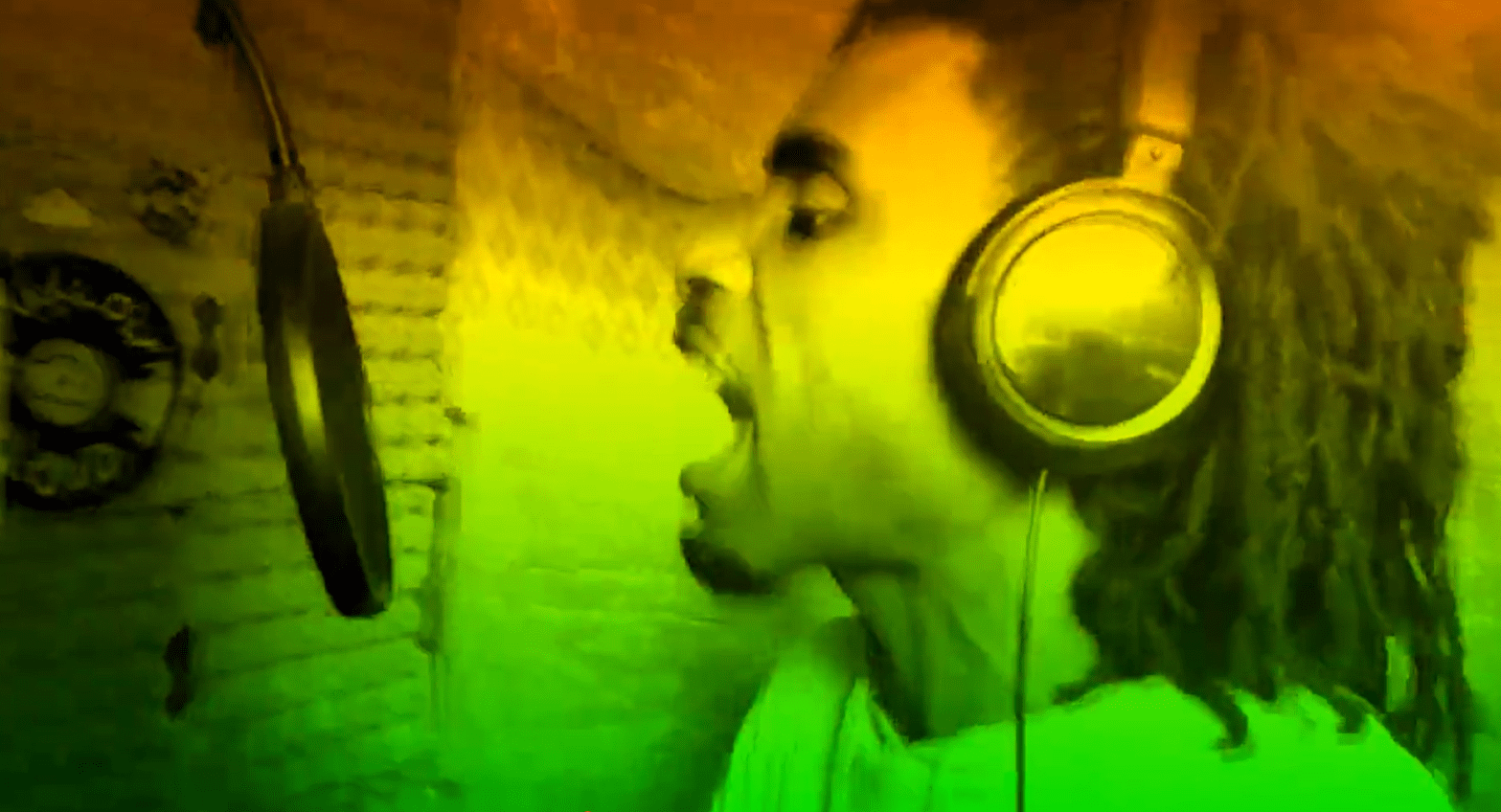
The relationship between Cuban music and American music has had its twists and turns. While rock and roll was long viewed with suspicion after the Revolution, hip-hop was different. In the 1990s, young Cubans connected strongly with the messages of politically conscious American rappers, and the movement received an unusual degree of official support. The Cuban Rap Agency was established and the Festival de Rap Cubano was launched.
When I arrived in Havana in the early 2000s, Cuban hip-hop was impossible to ignore. Documentary makers seemed to be everywhere. Back home, my main reference was a single film, Cuban Hip Hop All Stars, which opened a world of unknown superstars attacking everything from racism and poverty to family pressures and social hypocrisy. When Kamila and I launched El Grito, catching up on the state of Cuban hip-hop was high on my list, but traces of that vibrant scene in 2025 Havana were hard to find.
So I was excited when, during the 2026 Cubadisco festival, Kamila met the rapper El Limba. He had emerged in 2004, almost exactly where my own knowledge of Cuban hip-hop ended, and had remained active ever since. As a thoughtful conscious rapper whose work ranges from social commentary to questions of identity and self-acceptance, he seemed the ideal guide to what had happened next and his own part in that story.
Becoming Limba
I started out by asking what it was like getting established in those early days. Limba’s answer begins with a reminder that the scene I remembered was already highly developed by the time I arrived. The rappers who dominated those years have become legendary within Cuban hip-hop: Los Aldeanos, Mano Armada, Explosión Suprema, Hermanos de Causa, Los Paisanos, Anónimo Consejo, Obsesión, La Alianza, Proyecto Chardo, Pabelo and Bárbaro el Urbano among others. While I was discovering them through documentaries, he was studying them in person.
“Back then I liked going to the peñas [8-Mile style open mic nights] as a spectator, and what I did was absorb everything from everyone who got up on stage to rap.” As he pushed through, he realised these peñas were not casual affairs – “In order to get on stage I had to prove that I knew how to rap, not just say that I was a rapper. It could take months, even years, before you were accepted into a peña, because back then you had to be good. It wasn’t like now, when anyone can make a video and upload it to social media. Back then it wasn’t like that at all.”
The turning point came after school, when listening gave way to participation. Limba began writing, improvising and recording, gradually finding collaborators who helped him establish himself. The most important were Edilberto, known as El Castigador del Tiempo, and Fran Luis, known as Franco, who produced his first official album, Pa Los Que No Me Conocen (“For Those Who Don’t Know Me”).
Recognition arrived through the Malcolm Beybe collective. “The project had a huge impact on Cuban rap because we were like the Wu-Tang Clan of Cuba, except that there were many more of us,” he recalled.
The group toured nationally and became a fixture of the rap circuit. Looking back, however, he sees both success and naivety. “The problem was that we were very immature at the time and there was nobody to guide us. Almost everyone who came close to us was trying to take advantage of the situation.”
A second breakthrough came through the television programme Cuerda Viva. Winning its Premio Nobel category gave him the confidence that he belonged on bigger stages.
“I really didn’t think I was going to win, but it gave me the motivation to focus more on my career and take music seriously. I was no longer that rapper who performed at the peñas; I was now an artist performing at major events such as Jazz Plaza.”
Conscious Rap in a Reparto World
Limba describes himself as a conscious rapper, part of a tradition that remains unusually strong in Cuba – “Every song I make has the objective of creating some kind of change in society. I like people to dance and enjoy the music, but I also want them to think and take a positive message home with them.”
In Limba’s view, this is not a niche within Cuban hip-hop but its defining characteristic. “I would dare say that almost all of us make conscious rap. Beyond the rhythm each person uses or the flow they have, if you’re delivering a message, you’re creating awareness.”
Fakers are a frequent target. You can feel the disdain in his song ‘Date una Respetaita’ which addresses the banality and falsehood of some aspiring rappers (he names no names): –
“You say in your songs that you own jewellery and a Hummer,
while your wife at home doesn’t even have money for underwear.
You say in your songs that you like action,
but you freeze up whenever things get serious.”
He explains “Date una Respetaita is a song about talking about what you actually live, about each person’s reality, not pretending to be something you really aren’t. If you have mansions, cars and luxury, then you can talk about those things because that’s your reality. But if you don’t have any of that, why lie to the public and tell them that you do? I talk about what I live. If I take the bus, I’m not going to tell you I own a Ferrari. I’m not going to talk about prostitutes and sex when I live peacefully with my wife. The problem is that those are the kinds of things people want to hear. Nowadays people prefer fiction to reality.”
This is a theme that comes back to haunt us throughout our discussion – selling reality in a place where people want to escape.
Cuban Hip Hop In Intensive Care
I had intended to ask about the health of hip hop in present day Cuba, but El Limba shared the lyrics to his song Un Paciente (A Patient) portraying its subject as hospitalised, at death’s door, unable to move forward, recalling a life fighting injustice, before fighting bankruptcy and self-destruction. The name of the patient, Cuban Hip Hop.
Oh no! What went wrong?
“Most people in Cuba prefer to dance rather than listen. A lot of people don’t find rap attractive because of what we talk about. Most people won’t pay for a concert ticket where the artist is only going to remind them of the problems they already have, because the idea is that they go out to have fun and forget about those same problems. As a result, conscious rap declines, causing many rappers to adopt a strategy of making not only their music but also their lyrics more danceable and less conscious, because they need to earn money and support themselves, and by making conscious rap they may not be able to achieve that.”
He goes on to decry Cuban institutions, which “don’t like rap. close doors to us and open them to more commercial, more banal music, because our lyrics wake people up, and that’s a problem in this country. So for them it is preferable to have people dancing but asleep, rather than awake and aware of their reality. Neither the music industry, nor the media, nor the government is interested in Cuban rap, because for them an awakened people is a problem, not a business opportunity. The industry is only interested in making money. It doesn’t care if five-year-old children are already talking about sex, violence and drugs. It doesn’t care if young people end up killing each other at concerts where artists only sing about stabbings and fights. It doesn’t care if girls of twelve or thirteen are already having sex, all because of this vulgar, banal and degrading music that the same industries promote. With my followers, I seek exactly the opposite.”
That immediately raises a question. I highlight that spark of joyous tomfoolery – the Chuck D/Flavor Flav dynamic – that sugars the political message in US hip-hop. Is it too stark in Cuba? Here he gets contemplative and seems to be arguing with himself, at times a conscious purist, at others, reflecting that Cuban rappers need to compete as entertainers. Surely most artists invent things, whether to illustrate a point or simply to entertain. There’s a lot of space between saying “I take the bus so I have to rap about taking the bus” and literally trying to pass yourself off as an over-sexed millionaire when you’re just a poor kid. Right?
“I completely agree with you,” he comes back, “Cuban rap needs people who are capable of creating a spectacle, of making concerts more entertaining without the rapper losing his identity or his essence. Nowadays, if you’re not vulgar or crude, people don’t listen to you. Most people won’t pay for a concert ticket where the artist is only going to remind them of the problems they already have.”
But when I ask El Limba about his finest moment, it’s the time he did joke at his own success…
Flaco, Identity and Finding Your Voice
We asked El Limba about the high point of his career. The pinnacle came unexpectedly “Honestly, I feel proud of every song I make, especially when I see the audience’s reaction. But if there was one moment that made me feel proud, it was the first time I performed the song Flaco. I remember that I did it a cappella and the audience just went kind of crazy, euphoric. They started singing the chorus and when I came off the stage people were praising me. It was something crazy, but beautiful.”
Flaco – meaning Skinny – is a very personal reflection on physical appearance (‘My body belongs in the morgue’) and other people’s expectations. The song talks about accepting your body as it is.
“I look like a stick figure, and like a kite
My body would fly away when a strong wind blows.
That I’m like Don Quixote, but even though my bones show,
I no longer care”
Limba, we ask, was it always that way, or did you go through a period of searching for an image, a style or an identity that represented you as an artist? Have you ever felt pressure to conform to hip-hop stereotypes?
“I haven’t felt social pressure. I’ve always accepted myself as I am and, fortunately, people have accepted me that way too.
Flaco is about loving yourself as you are. It doesn’t matter whether you’re skinny, overweight, short, tattooed, missing an arm or a leg, black or white. Simply be happy as you are and don’t let social stereotypes affect you.
I have gone through different stages, and one of them was searching for my style, finding myself. There was a time when I felt that my way of rapping, my flow, wasn’t authentic. I even felt that the way I dressed or my image didn’t fit my music. But little by little I worked on that until I achieved my own identity.”
Let’s go back to that ‘wow’ moment when you first performed it. Why do you think that song connected so deeply with people? Were you surprised by the reaction? What did you feel in that moment?
“I think the first thing that made an impact was the originality of the song. The second was that a lot of people identified with it, and not only because they were skinny, but because of the message itself, which, as I’ve said, is about accepting yourself as you are. The first time I performed it, I was genuinely surprised by the reaction because I didn’t think people would like it so much. In fact, today I would dare say that it’s the song of mine that people like the most. With that song I felt that, after spending so much time searching for myself, I had finally found myself.
I felt that I had found a way to reach the audience with a positive message while also adding a touch of humour, allowing people to enjoy themselves and have a laugh at the same time.
Buses, not Ferraris
Cuban hip-hop experienced a remarkable golden age in the late 1990s and early 2000s. It attracted international attention, inspired documentaries, and produced artists of genuine originality and political conviction. That scene was built on merit. Before social media, rappers earned their place through peñas—competitive open mic nights where respect had to be won from peers over months or years. El Limba belongs to the generation that inherited that golden age rather than created it. He emerged in 2004, learned from its leading figures, and has spent the next two decades trying to carry that tradition forward. For Limba, rap is fundamentally about truth. His central artistic philosophy is that artists should rap about the lives they actually live rather than adopt imported fantasies of wealth, violence or hypersexuality. That commitment to authenticity has a cost. Conscious rap is harder to sell. Many audiences want escapism rather than social criticism, and many artists have moved towards more commercial genres in order to survive. Limba is not dogmatic. One of the most interesting moments in the interview is when he agrees that conscious rap also needs to entertain. He accepts my Chuck D/Flavor Flav argument that artists need to create a show without abandoning their principles and reflects that for whatever reasons – perhaps because the social reality is so grim – Cuban rappers have not done enough of that for their own good. He believes Cuban hip-hop is in decline, but not because its ideas have failed. Rather, he sees economic pressures, audience preferences and institutional attitudes combining to marginalise it. His own music reflects an alternative path. Songs like Date una Respetaita, Un Paciente and Flaco all tackle different subjects, but they are united by a concern with honesty, dignity and self-acceptance. The self he documents is happy in his own skin, angry with his situation, impoverished but enriched by a life in hip hop, above betraying the people he loves, to be found on the bus, not in a Ferrari. Cuban hip hop is about buses, not Ferrari’s.


