El Manisero – Crónica De La Cancion

¿Existe un comienzo para la música? Para mucha gente, el comienzo de la música cubana fue El Manisero, la canción que se dice que surgió del grito de un vendedor de maní en las calles de La Habana a mediados del siglo XIX, pero que se le atribuye al líder de la banda Moisés Simón y que se grabó por primera vez en 1927. Pero, ¿qué fue lo que realmente la inició?

La canción tuvo un efecto electrizante en la percepción de la música cubana en Estados Unidos, donde dio inicio a una década de rumba maníaca. En 1930, era una de las canciones más populares en el mundo occidental, versionada por Louis Armstrong entre cientos de otras, y vendió un millón de copias, con versiones cinematográficas de Groucho Marx, Cary Grant y Judy Garland, y durante los siguientes 29 años, La Habana fue la Ibiza del momento.

En Europa se convirtió en la primera canción cubana que impactó en la conciencia europea, aunque aflojó los lazos coloniales. Llegó a la bohemia parisina donde estudiaba el futuro presidente posindependiente de Senegal, Leopold Senghor , y a Filadelfia y Harlem, donde Kwame Nkrumah , el padre de Ghana, estudiaba Sociología y enseñaba la unidad africana. Se puede especular que la canción, que se inspira en los ritmos de África, fue trasladada a través de los campos de azúcar de Cuba a las calles de La Habana y de regreso al otro lado del Atlántico, y se adecuaba a la identidad poscolonial que exigía la negritud.

Tal vez la incorporación más directa de la canción a la música africana fue la del cardenal Rex Lawson, el cantante nigeriano de la alta sociedad de los años 60; escuchar su incorporación en su éxito “Sawale” es toda la confirmación que se puede obtener del continuum afrocubano. Y su influencia continuó, dando sabor a “Nwa Baby” de Flavour N’abania en este siglo.

Las letras suelen ser descartadas por banales, pero a mí me encantan. Llámame cachorro sucio, pero en cada pareado escaso veo campanillas del tipo de porquería que solo podrías decir si fueras un cantante de blues estadounidense de los años 30 o un bluesrockero británico de los 60. “Si quieres divertirte con la boca/comerte tu cucurucho de mani”, dice Moises Simon. Bo Carter responde: “Ahora no soy un barrendero, el hijo de un barrendero, puedo volarte el agujero hasta que venga el barrendero”. Moises prepara el escenario con “Qué tostado y rico es, no puedes pedir nada más” y Lil Johnson sube la apuesta con “Vamos, nena, vamos a divertirnos, solo pon tu perrito caliente en mi pan”, y luego aclara: “Tiene un buen perrito caliente, no me refiero a un Wienee”. Lo siguiente que sabes es que los chicos ingleses tienen limón corriendo por sus piernas y preguntan cómo es que el azúcar moreno sabe tan bien (mi tesis alternativa sobre la influencia del Pancake Day en el descanso y la relajación aún no se ha publicado).

Como se ve en el primer video –la versión más conocida de la canción–, Don Azpiazú de Cienfuegos lidera y Antonio Machín canta. No sé cómo se desarrolló la filmación de un cubano mestizo lanzando maníes a su público de Nueva York; todo parece muy recatado, pero pasaron 40 años antes de que Iggy Pop se atreviera a intentar algo similar en un campo de Cincinnati.

Comenzó en África y pasó por Cuba.

El Manisero – Story Of The Song

Is there a start to music? For many people, for Cuban music, the beginning was El Manisero, the song reputed to have derived from a peanut vendor’s cry in the streets of Havana in mid 1800s but attributed to the band leader Moises Simon and first recorded in 1927. But what actually did it kick off?

The song had an electrifying effect on the perception of Cuban music in America where it kicked off a decade of rumba mania. By 1930 it was one of the biggest songs in the Western world covered by Louis Armstrong among 100s of others, selling a million copies, with cinematic versions by Groucho Marx, Cary Grant and Judy Garland, and for the next 29 years Havana was the Ibiza of the day.

In Europe it became the first Cuban song to impact on the European consciousness, yet it loosened colonial ties. It arrived in a Parisian bohemia where future post-independence president Leopold Senghor of Senegal was studying, and in Philly and Harlem where Kwame Nkrumah, the father of Ghana, was studying Sociology and teaching African unity. It can be speculated that the song, drawing on the rhythms of Africa, translated via the sugar fields of Cuba to the streets of Havana, and back across the Atlantic, fit the bill for the postcolonial identity that negritude demanded.
Perhaps the most direct incorporation of the song into African music was by Cardinal Rex Lawson, the 60s Nigerian High Life singer – listening to its incorporation into his hit ‘Sawale’ is as much confirmation as you could get of the AfroCuban continuum. And its influence carried on, flavouring Flavour N’abania’s ‘Nwa Baby’ in this century.

The lyrics are often dismissed as being banal, but I love them. Call me a mucky pup but in every sparse couplet I see chimes of the kind of filth you could only get away with if you were a US blues singer in the 30s or a British bluesrocker in the 60s. “If you wanna have fun by the mouth/eat up your peanut cornet” says Moises Simon. Bo Carter replies “Now i ain’t no auger-man, no auger-man’s son,i can blow your hole ’til the auger-man comes”. Moises primes the pot with “How toasty and rich it is, You can’t ask for anything more” and Lil Johnson ups the ante with “Come on, baby, lets have some fun, Just put your hot dog in my bun” – going on to clarify “he’s got good hot dog! I don’t mean a Wienee”. Next thing you know the English boys have lemon running down their leg and are asking how come Brown Sugar tastes so good (my alternate thesis on the influence of Pancake Day on R&R is yet to be published).

As seen in the first video – the most high profile version of the song – Don Azpiazú of Cienfuegos leads and Antonio Machin sings. I don’t know how footage of a mixed race Cuban throwing peanuts at his New York audience played out – it all looks so demure but it was 40 years before Iggy Pop dared try something similar in a Cincinnati field.
It started in Africa and went through Cuba.

Historia del origen – Pete

Entonces, una crisis de algún tipo, aunque sea de gran variedad. Soy Pete, de 56 años, felizmente divorciado y con hijos en la universidad, moderadamente sano y, gracias a una combinación de suerte ciega y adherencia excesiva al estilo de vida corporativo, me encuentro al borde de una jubilación anticipada y cómoda.  Cero idea de qué hacer con toda esta libertad, estoy más concentrado en lo que no tendré que hacer que en lo que realmente haré. Obsesionado infantilmente con el culto a la juventud (como se definió definitivamente a finales de los 70 y principios de los 80), sólo recientemente me di cuenta de que los ideales punk revolucionarios, inconformistas y anticorporativos que engullí sin cuestionar podrían no haber sido el mejor telón de fondo para el camino que recorrí, pero terminé sonriendo y de alguna manera conservé una apertura a la nueva música y la voluntad de aguantar un montón de mierda para sentir emoción pop. 

Tuve una carrera de mochilero bastante impresionante cuando tenía 20 años, principalmente en el sudeste asiático, pero exploté en Cuba, posponiendo el inevitable deslizamiento hacia el arribismo, las hipotecas, el matrimonio y la responsabilidad parental, pero sucumbiendo al final. Cuando el matrimonio se disolvió, después de décadas de (muy agradables) campamentos franceses y (muy difamados) viajes en avión por Mallorca, descubrí que darle sabor a mis viajes era una forma de expresar mi desafío a las convenciones y recuperar mi yo actual de más allá de lo pálido en la mirada crítica. de mi antiguo yo guevarista apasionado, viril y urbano. Los viajes incluyeron Cabo Verde, Senegal, Colombia y Bristol y, a riesgo de racionalizar (todos eran atractivamente baratos), un tema común fue la prevalencia de lo que podría denominarse vagamente música afrocubana, que llegué a amar.

Naturalmente, aferrarme a las ideas pseudointelectuales que me formé cuando tenía diez años, adorar momentos efímeros de la cultura juvenil y una versión de mí mismo que cabreaba a medio mundo sin responsabilidades, deseando ser más genial sin tener en cuenta los logros sustanciales de mi carrera. Como meras cosas que hacía para pagar el alquiler, sólo me llevó un par de años darme cuenta de que orinar por todo el mundo escribiendo sobre la cultura y las ideas juveniles me haría más genial. ¿Qué podría ser más sencillo que subirse a un avión a Cuba, declararse bloguero de música afrocubana e inmediatamente recuperar la vitalidad sexy de su juventud? Lo descubriremos.

Gens: 45 años haciendo rock en Cuba

My first night at the Fabrica De Arte challenged my preconceptions of Cuban music. I’d expected my preconceptions to be challenged but it challenged the way that I expected my preconceptions to be challenged. The last time I was in Havana was 25 years ago and it had been a paradise for lovers of traditional Troba music but hell for anybody who’s looking for new music. Luckily, I had fallen into the former category but this time I was determined to find out what was emerging since the arrival of the Internet stopped the preservation of a particular view of what Cuban music meant.

Gens Today ….

So I arrived with an open mind, expecting a blend of baleful weather-worn troubadours and an edgier youth movement. I was determined to cast off preconceptions of what that youth movement might be and not to go looking for the next punk or hip-hop scene and not impose my prejudice of what young people are supposed to do. so when Camila took me for my first night at the Fabrica. I was open to anything old, Cuban, new or international – anything!

…. And As They Were

I wasn’t expecting nor initially particularly open to a revival of 1970s British classic rock. Now I’m not impartial to a bout of 1970s indulgence. in the 18 months. I’ve seen Led Zeppelin tributes, A creaky Jesus and Mary Chain, and only a few weeks before arriving in Havana me and my 70-year-old friend were in an arena in Birmingham watching the surviving members of Deep Purple go through their moves. But (excluding myself because of the Sprints, Idles, Amyl and the Sniffers, GOAT and English Teacher ticket stubs in my pocket) i thought there was something fossilised about people still watching the bands that they watched 50 years ago. I’m hypocrite, pleased to meet you.

All it took was a vigorous ‘Highway Star’ to make me reappraise.

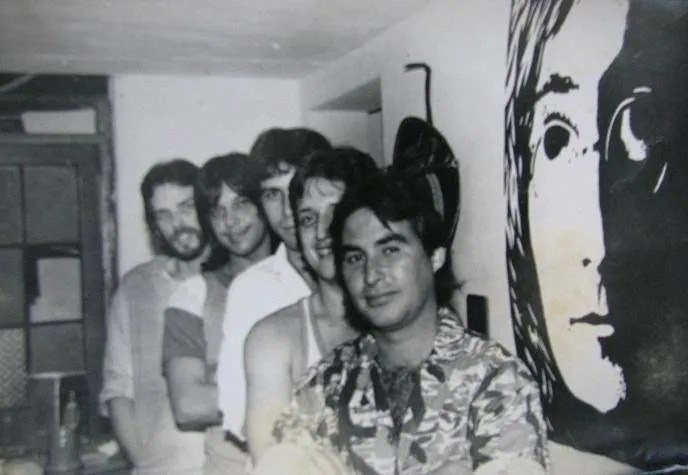
For one thing the band in front of me, Gens, formed when John Lennon was still with us and soldiered through when rock music ( “the music of the enemy, the language of the enemy”) was either banned or frozen out of a state-curated cultural scene, and musicians persecuted, stigmatised and scorned. Gradually the revolutionaries realised that the counterculture of the capitalist world were more their friends than their enemies with ground breaking gigs by bands like the Manic Street Preachers leading, most notably, to a one of performance by The Rolling Stones in 2015. European bands are still pretty rare in Havana however.

For another thing, any advice that I might have given them was discouraged by the rendition of ‘Killing In The Name Of’. ‘Fuck me, they won’t do what I tell them’ I thought, flashing back to my middling corporate career. If Cubans with an average age of I’d get around 40 is enthusiastically catching up on what their parents were banned from listening to, I’m on board. We quickly cut the first El Grito video, I fished my footage of the Kiss farewell concert in Bogota and we went backstage to try and impress the band.

I spoke to Lilian Ojeda, a solo performer guesting with the band who told me of a childhood of furtive listens to her parents Beatles collection, before zooming off into the night. Kamila scored this interview with their founder, drummer and manager Carlos Rodriguez who talked about the bands formation, it’s early suppression and intolerance, working with Nueva Trova superstar Silvio Rodriguez, a long list of hits, the future of Cuban rock and the role of the Fábrica.

Gens: 45 Years Making Rock In Cuba

My first night at the Fabrica De Arte challenged my preconceptions of Cuban music. I’d expected my preconceptions to be challenged but it challenged the way that I expected my preconceptions to be challenged. The last time I was in Havana was 25 years ago and it had been a paradise for lovers of traditional Troba music but hell for anybody who’s looking for new music. Luckily, I had fallen into the former category but this time I was determined to find out what was emerging since the arrival of the Internet stopped the preservation of a particular view of what Cuban music meant.

Gens Today ….

So I arrived with an open mind, expecting a blend of baleful weather-worn troubadours and an edgier youth movement. I was determined to cast off preconceptions of what that youth movement might be and not to go looking for the next punk or hip-hop scene and not impose my prejudice of what young people are supposed to do. so when Camila took me for my first night at the Fabrica. I was open to anything old, Cuban, new or international – anything!

…. And As They Were

I wasn’t expecting nor initially particularly open to a revival of 1970s British classic rock. Now I’m not impartial to a bout of 1970s indulgence. in the 18 months. I’ve seen Led Zeppelin tributes, A creaky Jesus and Mary Chain, and only a few weeks before arriving in Havana me and my 70-year-old friend were in an arena in Birmingham watching the surviving members of Deep Purple go through their moves. But (excluding myself because of the Sprints, Idles, Amyl and the Sniffers, GOAT and English Teacher ticket stubs in my pocket) i thought there was something fossilised about people still watching the bands that they watched 50 years ago. I’m hypocrite, pleased to meet you.

All it took was a vigorous ‘Highway Star’ to make me reappraise.

For one thing the band in front of me, Gens, formed when John Lennon was still with us and soldiered through when rock music ( “the music of the enemy, the language of the enemy”) was either banned or frozen out of a state-curated cultural scene, and musicians persecuted, stigmatised and scorned. Gradually the revolutionaries realised that the counterculture of the capitalist world were more their friends than their enemies with ground breaking gigs by bands like the Manic Street Preachers leading, most notably, to a one of performance by The Rolling Stones in 2015. European bands are still pretty rare in Havana however.

For another thing, any advice that I might have given them was discouraged by the rendition of ‘Killing In The Name Of’. ‘Fuck me, they won’t do what I tell them’ I thought, flashing back to my middling corporate career. If Cubans with an average age of I’d get around 40 is enthusiastically catching up on what their parents were banned from listening to, I’m on board. We quickly cut the first El Grito video, I fished my footage of the Kiss farewell concert in Bogota and we went backstage to try and impress the band.

I spoke to Lilian Ojeda, a solo performer guesting with the band who told me of a childhood of furtive listens to her parents Beatles collection, before zooming off into the night. Kamila scored this interview with their founder, drummer and manager Carlos Rodriguez who talked about the bands formation, it’s early suppression and intolerance, working with Nueva Trova superstar Silvio Rodriguez, a long list of hits, the future of Cuban rock and the role of the Fábrica.

Origin Stories – Pete

So a crisis of some sorts, albeit the nice variety. I’m Pete, 56, happily divorced with kids at uni, moderately healthy, and through a combination of blind luck and excessive adherence with the corporate lifestyle I find myself on the verge of an early and comfortable retirement.  Zero idea what to do with all this freedom, I’m more focussed on what I won’t have to do than I am on what I will actually do. Childishly obsessed with the cult of youth (as definitively defined in the late 70s/early 80s), I only recently realised that the revolutionary, non-conformist and anti-corporate punk ideals that I gobbled up unquestioningly might not have been the best background for the path I trod, but I’ve come up smiling, and somehow retained an openness to new music and a willingness to put up with a lot of shit to get a pop thrill. 

I had a pretty impressive backpacking career in my 20s, mostly South East Asia but blasts in Cuba, putting off the inevitable slide towards careerism, mortgage, marriage and parental responsibility but succumbing in the end. As the marriage dissolved, after decades of (very pleasant) French campsites and (much maligned) Majorcan fly drives, I found spicing up my travels a way of voicing defiance to convention and bringing my current self back from beyond the pale in the judgemental gaze of my passionate, virile and urbane former, guevarista self. Trips included Cape Verde, Senegal, Colombia and Bristol, and, at the risk of post-rationalising (they were all attractively cheap) a common theme was the prevalence of what could be loosely termed Afro-Cuban music, which I grew to love.

Naturally, clinging on to the psuedo-intellectual ideas I formed when I was ten, worshipping ephemeral moments in youth culture and a version of myself that pissed around half the world with no responsibilities, wishing I was cooler while disregarding the substantial achievements of my career as merely things I did to pay the rent, it only took me a couple of years to work out that pissing around the world writing about youth culture and ideas would make me cooler. What could be more straightforward than hopping on a plane to Cuba, declaring yourself an Afro-Cuban music blogger and immediately regaining the sexy vitality of your youth? We’ll find out.